Strategic Thinking
Strategic Thinking: Seeing the Bigger Picture, Acting with Precision
Welcome back to another edition of Next-Level Skills. Each edition, we explore the human and leadership capabilities that help us navigate work and life more effectively. Skills that move beyond theory and into practical application.
A warm welcome to everyone who has joined our community since the last edition. Whether you've been with us since the beginning or have recently discovered the newsletter or the book, thank you for being part of this journey.
This week, we explore Strategic Thinking, a skill that enables us to move beyond short-term problem-solving and plan for long-term success. Whether in business, leadership, or personal development, those who think strategically make better decisions, anticipate challenges, and create lasting impact.
When a Quick Fix Wasn’t the Right Answer
A few years ago, I was working on a project where a key process had broken down, delaying our timeline. The immediate instinct was to apply a quick fix — adjust workflows, redistribute tasks, and move forward. However, something didn’t sit right. Instead of rushing to implement a temporary solution, I decided to step back and assess the bigger picture.
By looking deeper, I realised the issue wasn’t just about this one delay. It was part of a larger pattern — inefficient communication between teams was causing repeated setbacks. Instead of treating the symptom, we needed to address the root cause. We introduced structured check-ins, clearer task ownership, and streamlined reporting processes.
The result? Not only did we resolve the current issue, but we also prevented future delays, improving overall team efficiency.
What is Strategic Thinking?
Strategic thinking is the ability to analyse situations, anticipate future challenges, and plan actions that lead to sustainable success. It requires looking beyond immediate concerns to understand broader patterns, risks, and opportunities.
The essence of strategy is choosing what not to do.
— Michael Porter
Strategic thinking isn’t just about taking action — it’s about making deliberate choices that align with long-term goals.
Why Strategic Thinking Matters
Strategic thinking allows us to move beyond short-term fixes and make decisions that drive long-term success. It helps us anticipate challenges, identify opportunities, and align our actions with broader goals.
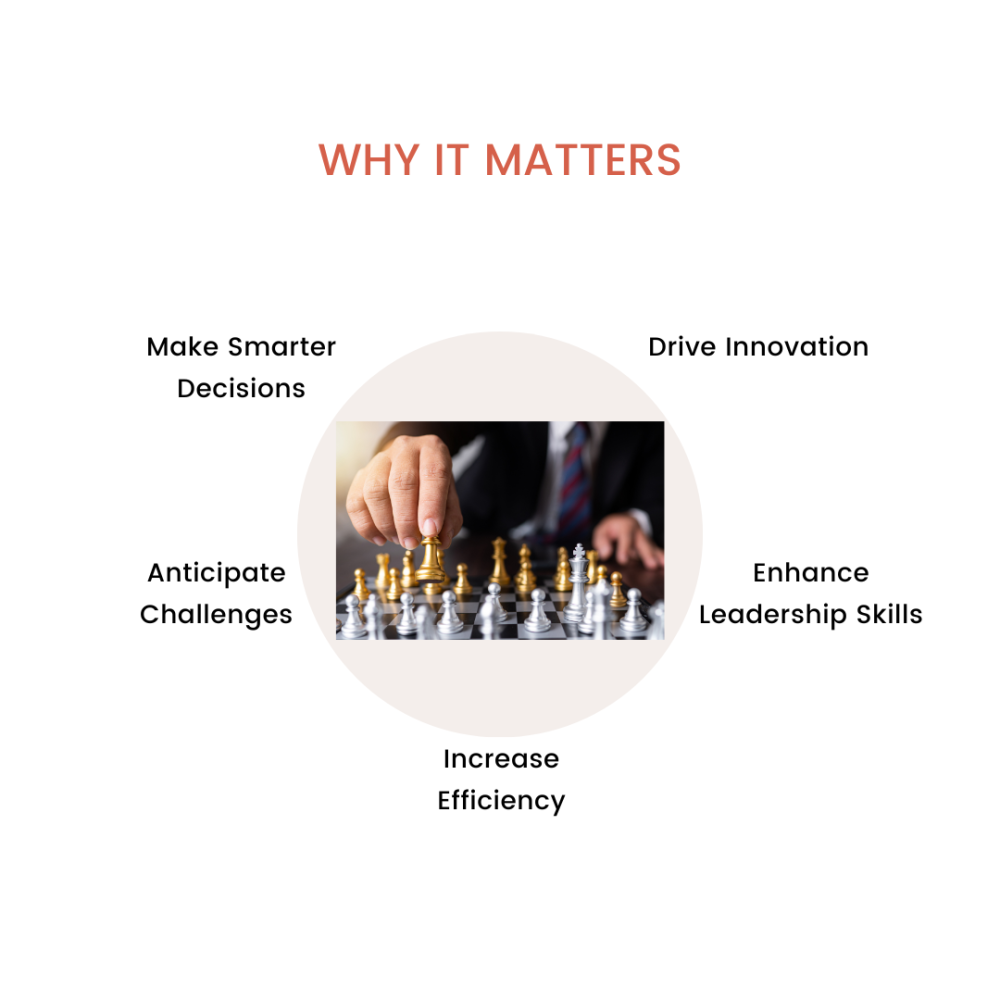
Strategic thinking allows us to:
- 1Make Smarter DecisionsConsidering long-term impact prevents rushed, reactionary choices.
- 2Anticipate ChallengesLooking ahead allows us to prepare for risks before they become crises.
- 3Increase EfficiencyA structured approach to planning reduces wasted effort and resources.
- 4Enhance Leadership Skills 5. Drive InnovationLeaders who think strategically inspire confidence and direction.
- 5Drive InnovationSeeing the bigger picture enables creative problem-solving and innovation.
Developing strategic thinking ensures that our actions are not just solving today’s problems but shaping a better future. We gain clarity, make better choices, and create a more impactful career path.
To harness its full potential, we must first understand the key elements that shape effective strategic thinking.
The Key Elements of Strategic Thinking
Strategic thinking isn’t just about planning — it’s about seeing patterns, assessing risks, and making decisions that align with long-term objectives. By focusing on key elements like vision, adaptability, and analytical thinking, we can approach challenges with clarity and confidence.
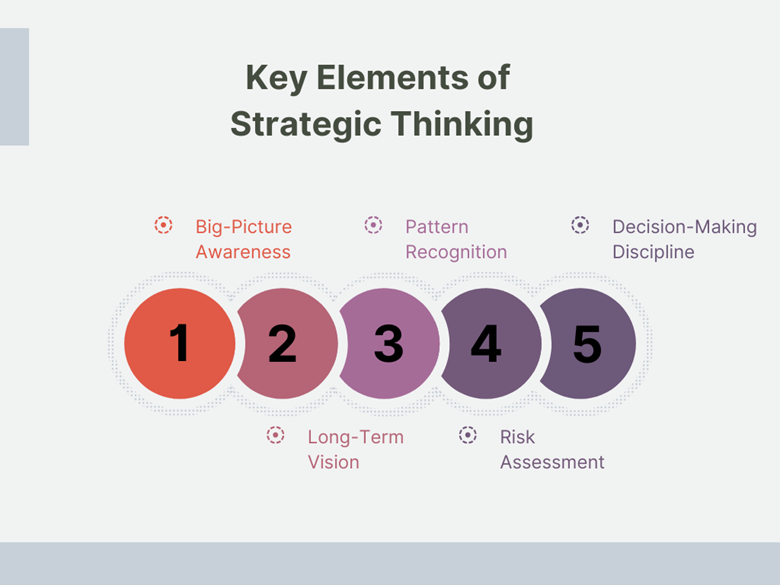
Key elements of Strategic Thinking are:
- 1Big-Picture AwarenessUnderstanding how different factors interact within a system.
- 2Long-Term VisionAligning daily actions with future goals.
- 3Pattern RecognitionIdentifying trends and connections that others might miss.
- 4Risk AssessmentWeighing potential risks and benefits before making decisions.
- 5Decision-Making DisciplineMaking choices based on logic, not just immediate needs.
Mastering these elements allows us to navigate complexity and make informed, forward-thinking decisions.
Now, let’s explore practical strategies that help us strengthen our strategic thinking skills in everyday situations.
Pro Tips for Strengthening Strategic Thinking
Strategic thinking is a skill that improves with practice, and the right techniques can help us sharpen our ability to plan ahead. By applying structured approaches, we can make better decisions, anticipate challenges, and create long-term value.
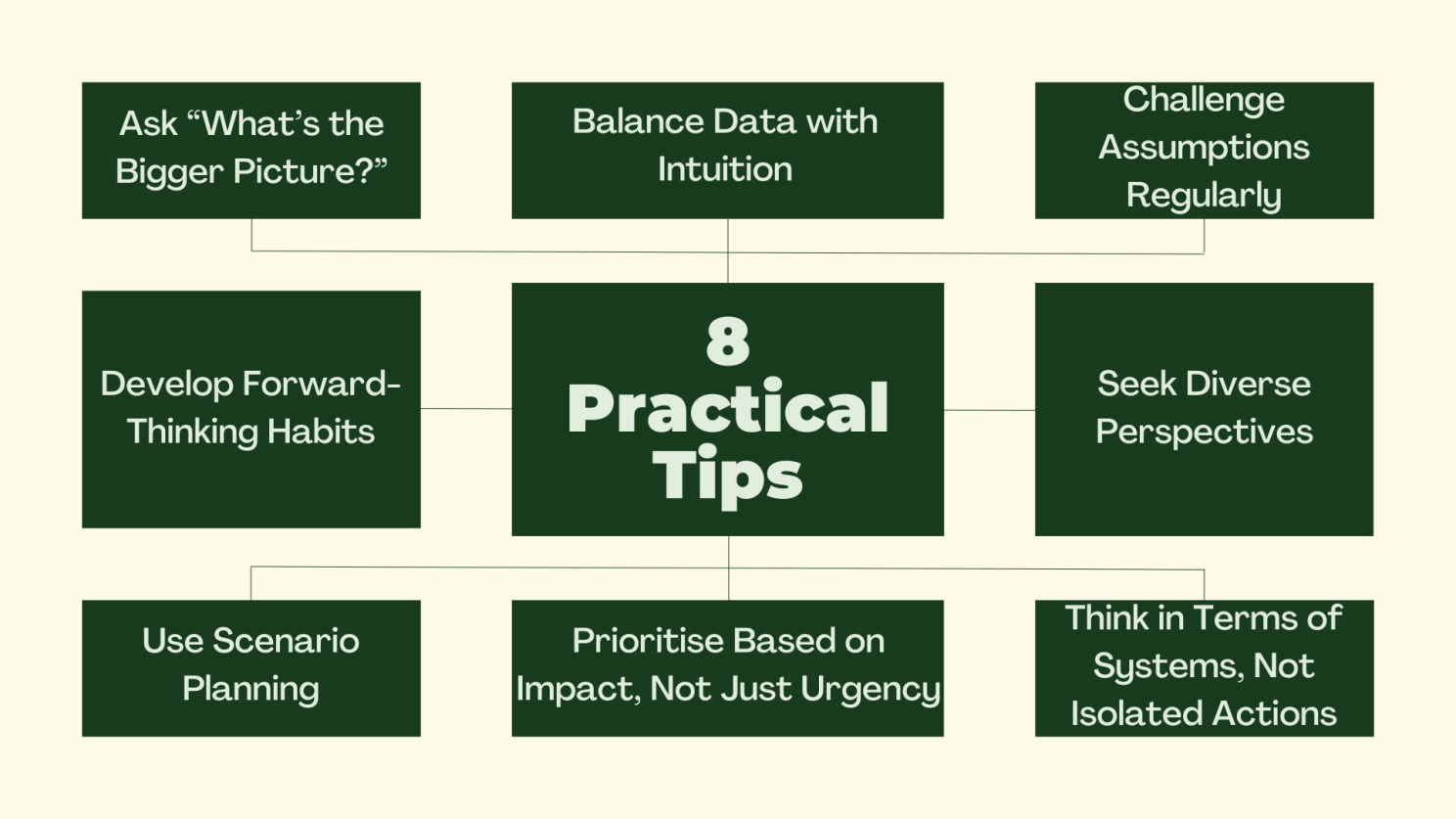
Ask “What’s the Bigger Picture?”
Before making a decision, step back and analyse how it fits into the broader context. Consider long-term consequences, not just immediate gains.
Pro Tip: If a team member suggests cutting costs by reducing training budgets, ask, “How will this impact long-term employee performance and retention?”
Develop Forward-Thinking Habits
Get into the habit of looking ahead by regularly assessing industry trends, competitor strategies, and potential obstacles.
Pro Tip: If working in marketing, track emerging customer behaviours to anticipate shifts rather than react to them later.
Use Scenario Planning
Instead of assuming one outcome, consider multiple future scenarios and prepare for each possibility.
Pro Tip: If launching a product, map out different market responses — best case, worst case, and most likely scenario — and plan accordingly.
Balance Data with Intuition
While data provides valuable insights, strategic thinking also requires intuition and experience to guide decisions.
Pro Tip: A company might have data showing declining engagement with a product, but deeper customer conversations may reveal an emerging need that numbers alone wouldn’t capture.
Prioritise Based on Impact, Not Just Urgency
Strategic thinkers focus on tasks that drive long-term results rather than getting lost in short-term urgencies.
Pro Tip: Instead of responding to emails all day, block time for deep work on high-value projects that contribute to overarching goals.
Challenge Assumptions Regularly
Many decisions are based on outdated or unexamined assumptions. Questioning them ensures we don’t operate on flawed premises.
Pro Tip: If a long-standing process seems inefficient, ask, “Why do we do it this way? Is there a better alternative?”
Seek Diverse Perspectives
Engaging with people from different backgrounds and expertise areas broadens our thinking and reveals insights we might miss.
Pro Tip: Before making a strategic decision, consult with colleagues from finance, operations, and marketing to get a holistic view.
Think in Terms of Systems, Not Isolated Actions
Everything in an organisation or project is interconnected. Understanding how one change affects the larger system prevents unintended consequences.
Pro Tip: Before changing a pricing model, consider how it affects customer behaviour, sales teams, and long-term brand perception.
In preparing for battle, I have always found that plans are useless, but planning is indispensable.
— Dwight D. Eisenhower
This quote by Dwight D. Eisenhower reminds us that while circumstances may change, the process of strategic thinking prepares us to adapt and make informed decisions.
Now, let’s put these insights into action with a simple challenge designed to strengthen our strategic mindset.
This and other essential skills are covered in Next-Level Skills — the book.
Learn more about the Book →A Challenge
Choose one decision — big or small — that you’re currently facing. Instead of reacting immediately, apply strategic thinking:
Reflection Questions
This exercise helps build the habit of thinking strategically before making decisions.
Some Final Thoughts...
Strategic thinking isn’t just about solving problems — it’s about shaping the future. When we train ourselves to think long-term, challenge assumptions, and analyse the bigger picture, we become more effective in our roles and better prepared for uncertainty.
Strategy without tactics is the slowest route to victory. Tactics without strategy is the noise before defeat.
— Sun Tzu
Thank you for being part of Next-Level Skills! I’d love to hear — how do you apply strategic thinking in your work or life? Let’s exchange insights and continue learning from one another.
Until Next Time,
Abhishek
Founder & CEO, LegiQ | Building Intelligent Edge Hardware
What’s the biggest challenge you face when trying to think strategically?
How can organisations encourage employees to think strategically at all levels?
How do we balance being proactive with adapting to unexpected changes?
How do we measure whether a strategic decision was successful?
What’s an example of a time when strategic thinking helped you make a better decision?
How do we develop the habit of thinking long-term when dealing with daily urgencies?
How can we improve our ability to recognise patterns and anticipate future challenges?
What’s a decision you wish you had approached with more strategic thinking?
What role does creativity play in strategic thinking?
What tools or frameworks do you use to approach strategic decisions?
Gift the Book
- ✓A colleague stepping into leadership.
- ✓A team member navigating change.
- ✓A friend looking to take their next step professionally.
This and other essential skills are covered in Next-Level Skills — the book.
Learn more about the Book →This edition is reserved for supporters
Subscribe free, then unlock every past edition with just 1 successful referral.
Subscribe Free →Enjoyed this edition?
Get the next one in your inbox — first week of every month.