Negotiation Skills
Negotiation Skills: The Art of Reaching Win-Win Outcomes
Welcome back to another edition of Next-Level Skills. Each edition, we explore the human and leadership capabilities that help us navigate work and life more effectively. Skills that move beyond theory and into practical application.
A warm welcome to everyone who has joined our community since the last edition. Whether you've been with us since the beginning or have recently discovered the newsletter or the book, thank you for being part of this journey.
This week, we focus on Negotiation Skills, a critical ability that helps us navigate professional and personal discussions with confidence and strategy. Whether closing a deal, resolving a conflict, or simply influencing an outcome, strong negotiation skills allow us to advocate for our interests while fostering positive relationships.
When I Learned That Negotiation Wasn’t About Winning
Early in my career, I believed negotiation was about pushing hard for the best deal — convincing the other party to agree to my terms. Once, I approached a key salary negotiation with this mindset, listing every reason why I deserved more and expecting the employer to concede. However, instead of securing a better offer, I faced resistance.
The hiring manager said,
“We value you, but negotiation is a two-way street. What can we do to meet in the middle?”
At that moment, I realised negotiation wasn’t about defeating the other side — it was about finding a solution that worked for both parties. I shifted my approach, asked questions, and understood what the company valued. Instead of focusing only on salary, I negotiated for additional benefits and career growth opportunities.
The result? A complete package that worked for both of us.
Since then, I’ve applied this lesson across business discussions, workplace dynamics, and even everyday interactions.
What is Negotiation?
Negotiation is the process of reaching an agreement between two or more parties with differing interests, while striving for a mutually beneficial outcome.
It involves communication, persuasion, problem-solving, and compromise.
He who has learned to disagree without being disagreeable has discovered the most valuable secret of negotiation.
— Chris Voss, former FBI negotiator
The best negotiators don’t just argue their case — they listen, adapt, and find solutions that create long-term success.
Why Negotiation Skills Matter
Negotiation is more than just securing a better deal — it’s a fundamental skill that shapes how we communicate, solve problems, and build relationships. Strong negotiators can influence outcomes, find creative solutions, and create agreements that benefit all parties involved.
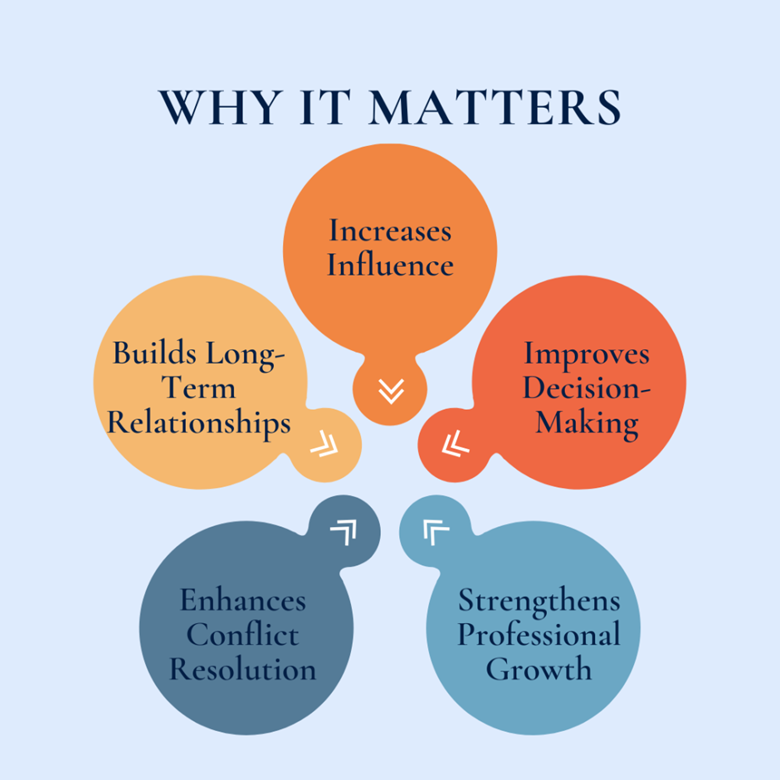
Whether in business, leadership, or personal interactions, negotiation skills provide key advantages:
1. Increases Influence – Negotiation allows us to advocate for our needs while building trust.
2. Improves Decision-Making – Skilled negotiators assess options objectively before making a decision.
3. Strengthens Professional Growth – Whether negotiating a raise, promotion, or partnership, this skill shapes our career trajectory.
4. Enhances Conflict Resolution – Good negotiators turn conflicts into collaborative discussions.
5. Builds Long-Term Relationships – The best negotiations foster respect and future cooperation.
Understanding the importance of negotiation is just the beginning.
Mastering negotiation allows us to navigate workplace discussions, business deals, and even daily interactions with confidence. To become effective negotiators, we must first understand the structured approach that leads to successful outcomes.
The Key Phases of Negotiation
Negotiation is not just about persuasion —
it’s about preparation, strategy, and adaptability.
Negotiation follows a structured process that ensures both parties reach a favourable outcome. By understanding each phase, we can navigate discussions with confidence and adapt our approach as needed.
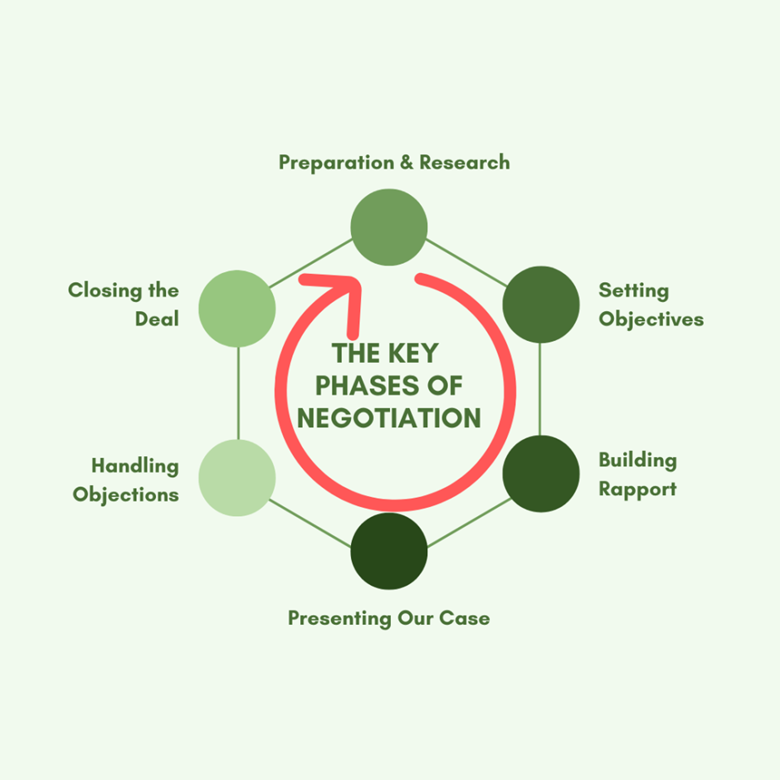
The process can be broken into key phases:
1. Preparation & Research – Understanding both our needs and the other party’s priorities.
2. Setting Objectives – Defining clear goals and knowing our non-negotiables.
3. Building Rapport – Establishing trust to create a collaborative discussion.
4. Presenting Our Case – Communicating our position with clarity and confidence.
5. Handling Objections – Addressing concerns and finding common ground.
6. Closing the Deal – Securing a final agreement that satisfies both sides.
Following these key phases helps us stay strategic and focused during negotiations, rather than reacting impulsively.
Now, let’s explore practical strategies to strengthen our negotiation skills in real-world scenarios.
Pro Tips for Mastering Negotiation
Effective negotiation isn’t about being the loudest voice in the room — it’s about preparation, active listening, and strategic communication. By applying key techniques, we can navigate discussions with clarity and reach mutually beneficial agreements.
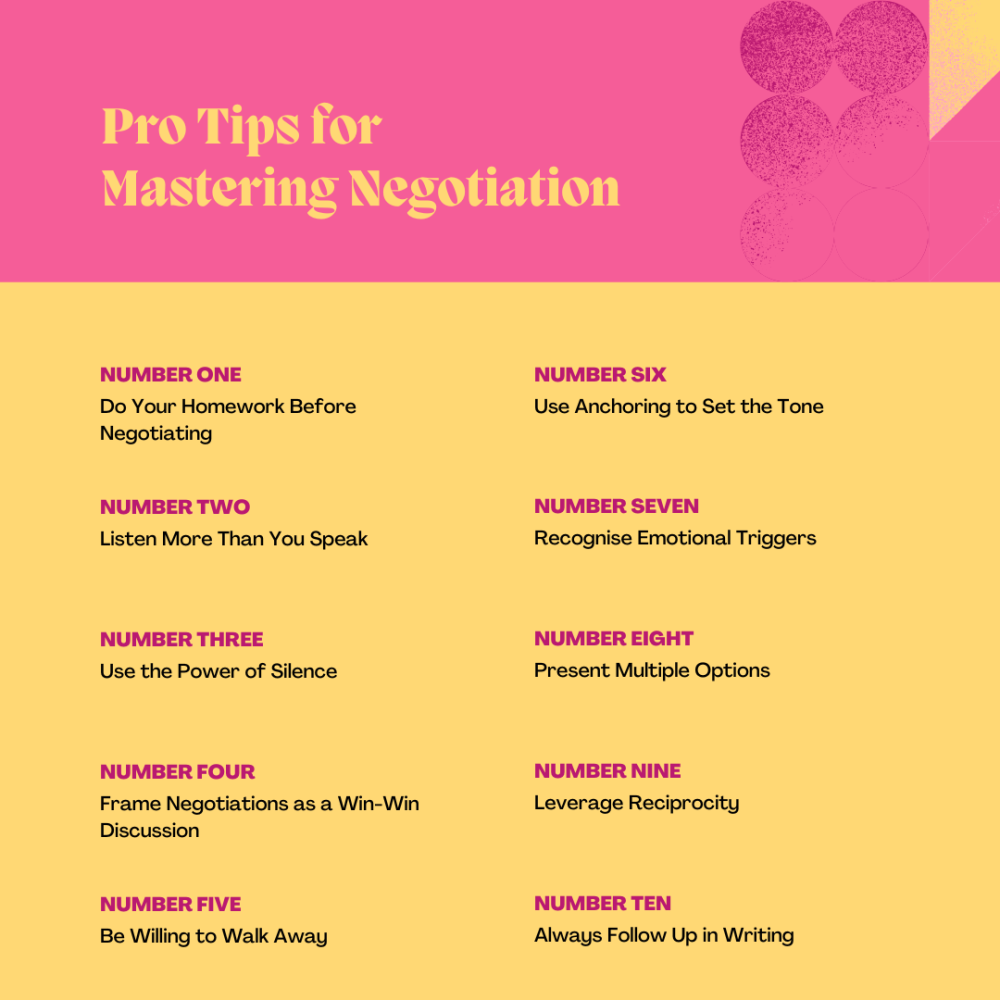
Do Your Homework Before Negotiating
The more prepared we are, the stronger our negotiation position. Research the other party’s needs, priorities, and alternatives.
Pro Tip: Before negotiating a job offer, research industry salary benchmarks and identify what benefits matter most to us.
Listen More Than You Speak
The best negotiators spend more time listening than talking. Understanding the other side’s motivations creates leverage.
Pro Tip: In a business deal, ask “What are your biggest concerns?” before proposing solutions.
Use the Power of Silence
Pausing before responding can make the other party reveal more information or reconsider their position.
Pro Tip: After making an offer, wait for the response instead of immediately justifying it.
Frame Negotiations as a Win-Win Discussion
Position negotiations as problem-solving conversations rather than conflicts.
Pro Tip: Instead of saying, “I need a higher budget,” say, “How can we structure the budget to meet both our objectives?”
Be Willing to Walk Away
Having a clear bottom line prevents us from settling for a bad deal.
Pro Tip: If a job offer doesn’t meet our key priorities, knowing when to decline ensures we don’t compromise our long-term goals.
Use Anchoring to Set the Tone
The first number mentioned in a negotiation often sets expectations.
Pro Tip: When negotiating a salary, stating “I was expecting something in the $90,000–100,000 range” sets a higher reference point than waiting for their offer.
Recognise Emotional Triggers
Negotiations can be emotional — staying calm and composed maintains control.
Pro Tip: If faced with an aggressive negotiator, responding with “Let’s focus on finding a solution that works for both of us” shifts the conversation.
Present Multiple Options
Giving alternatives makes it easier for the other party to agree while still feeling in control.
Pro Tip: If a client rejects an initial proposal, offering two alternative solutions increases the chances of agreement.
Leverage Reciprocity
Small concessions build goodwill and make the other side more likely to reciprocate.
Pro Tip: “If we can adjust the timeline slightly, I can accommodate your request on pricing.”
Always Follow Up in Writing
Documenting agreements prevents misunderstandings and reinforces commitments.
Pro Tip: After closing a deal, sending a recap email summarising the agreed points ensures alignment.
Resonating on the above words by John F Kennedy, by applying these strategies, we can navigate negotiations with confidence and achieve outcomes that benefit everyone involved.
Now, let’s take this a step further with a simple challenge to practise negotiation skills this week.
This and other essential skills are covered in Next-Level Skills — the book.
Learn more about the Book →A Challenge
This week, identify a small negotiation opportunity — whether in work or daily life.
It could be:
Reflection Questions
Some Final Thoughts...
Negotiation is not about winning or losing — it’s about creating value through thoughtful discussion and mutual agreement. The more we refine our ability to communicate, persuade, and problem-solve, the more successful and confident we become.
I never lose. I either win or learn.
— Nelson Mandela
Every negotiation is an opportunity to improve our skills, strengthen relationships, and build long-term success.
Thank you for being part of Next-Level Skills! What’s the best negotiation tip you’ve ever used? Let’s share and learn from each other.
Until Next Time,
Abhishek
Founder & CEO, LegiQ | Building Intelligent Edge Hardware
How do we balance being assertive without being aggressive in negotiations?
What’s the most important lesson you’ve learned from a past negotiation?
What’s one negotiation technique that has worked well for you?
How do we handle a negotiation when the other party is unwilling to compromise?
How can we use negotiation skills in everyday life, beyond business deals?
How do we rebuild trust after a tough or failed negotiation?
What’s the best way to prepare for a high-stakes negotiation?
How do we negotiate when we feel like we have less power in the discussion?
What role does emotional intelligence play in successful negotiations?
What’s the biggest mistake people make in negotiations?
Apply These Skills
- ✓Put the frameworks into practice this month.
- ✓Use the reflection prompts inside the book.
- ✓Build habits that compound over time.
This and other essential skills are covered in Next-Level Skills — the book.
Learn more about the Book →This edition is reserved for supporters
Subscribe free, then unlock every past edition with just 1 successful referral.
Subscribe Free →Enjoyed this edition?
Get the next one in your inbox — first week of every month.