Emotional Intelligence
The Heart of Success: Emotional Intelligence at Work
Welcome back to another edition of Next-Level Skills. Each edition, we explore the human and leadership capabilities that help us navigate work and life more effectively. Skills that move beyond theory and into practical application.
A warm welcome to everyone who has joined our community since the last edition. Whether you've been with us since the beginning or have recently discovered the newsletter or the book, thank you for being part of this journey.
This week, we explore Emotional Intelligence (EI), a skill often referred to as the secret ingredient to professional and personal success.
The Heated Moment That Taught Me Empathy
A few years ago, during a critical client meeting, tensions ran high. One of my colleagues, Sarah, presented her proposal, only to face sharp criticism from the client. Feeling the atmosphere shift, I saw Sarah’s confidence start to falter.
Instead of jumping in to defend her work or escalating the situation, I paused and observed. The client’s frustration wasn’t with Sarah’s efforts - it was a reflection of the challenges their team was facing. After acknowledging their concerns with empathy, I steered the conversation back to collaborative problem-solving.
Later, Sarah thanked me, not just for diffusing the situation but for recognising her emotions and creating a safe space to recover.
What is Emotional Intelligence?
Emotional Intelligence, or EI, is the ability to recognise, understand, and manage our own emotions while empathising with and influencing others.
What really matters for success, character, happiness, and life-long achievements is a definable set of social skills: your EQ.
— Daniel Goleman, one of the leading voices on EI
Unlike IQ, which measures cognitive ability, EI focuses on how we navigate relationships, resolve conflicts, and lead with empathy.
Why Emotional Intelligence Matters in the Workplace
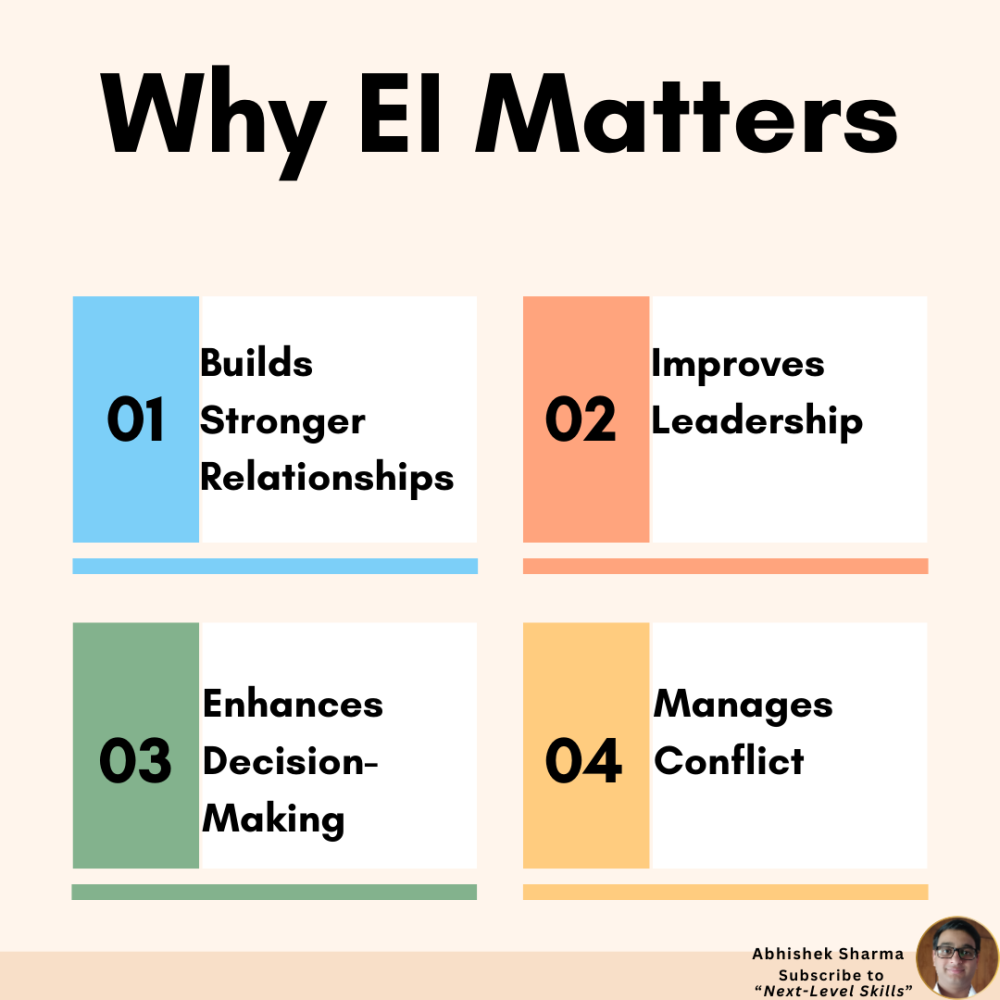
- 1Builds Stronger RelationshipsEmotional intelligence helps you connect with others on a deeper level. When you show genuine empathy and understanding, trust naturally follows. This trust then becomes the foundation of effective collaboration, whether with teammates, clients, or leaders. For example, recognising when a colleague is overwhelmed and offering support can strengthen your bond with that colleague and foster a positive team culture eventually.
- 2Improves LeadershipGreat leaders don’t just direct — they inspire. High EQ enables leaders to read the emotional temperature of their teams, adapt their communication styles, and provide motivation tailored to individual needs. Leaders with strong EQ are better equipped to handle challenges like resistance to change or team burnout, guiding their teams with both clarity and compassion.
- 3Enhances Decision-MakingEmotions often play an invisible role in decision-making, sometimes clouding judgment. Emotional intelligence helps you identify these biases, creating space for more balanced and rational choices. For instance, being able to separate feelings of frustration from facts during a high-pressure situation ensures that decisions are fair and objective.
- 4Manages ConflictConflict is inevitable in any workplace, but how it’s handled makes all the difference. EQ equips you with the tools to navigate disagreements constructively by understanding each party’s emotions and perspectives. Rather than escalating the situation, a high-EQ approach focuses on finding common ground and fostering resolution. For example, acknowledging someone’s frustration before presenting your point of view can significantly de-escalate tension.
Research from the World Economic Forum lists emotional intelligence as one of the top skills needed in the modern workforce. Why?
Because workplaces aren’t just about processes - they’re about people.
The Five Components of Emotional Intelligence
- 1Self-AwarenessSelf-awareness is the foundation of emotional intelligence. It’s about understanding your emotions, recognising how they influence your behaviour, and knowing your strengths and weaknesses. For instance, if you’re aware that tight deadlines make you anxious, you can take proactive steps to manage that anxiety before it affects your performance or interactions.
- 2Self-RegulationWhile self-awareness helps you identify emotions, self-regulation is about managing them. It’s the ability to stay composed, avoid knee-jerk reactions, and adapt to changing circumstances. For example, when receiving unexpected critical feedback, self-regulation allows you to process it calmly instead of reacting defensively.
- 3MotivationEmotional intelligence goes beyond recognising and controlling emotions — it also fuels intrinsic motivation. People with high EQ are driven by goals that align with their values rather than external rewards. They maintain optimism and resilience even when faced with setbacks.
- 4EmpathyEmpathy is the ability to understand and share the feelings of others. It’s about recognising emotions in verbal and non-verbal cues, from tone to body language. Empathy allows you to respond in a way that validates others' experiences, strengthening trust and connection.
- 5Social SkillsStrong social skills are the visible manifestation of emotional intelligence in action. They include effective communication, conflict resolution, teamwork, and the ability to influence and inspire others.
each step you take builds your capacity to navigate emotions — your own and others’ — with confidence and grace. Together, these elements form the cornerstone of emotional intelligence, empowering you to lead with empathy, resilience, and authenticity.
People will forget what you said, people will forget what you did, but people will never forget how you made them feel.
— Maya Angelou
How to Develop Emotional Intelligence
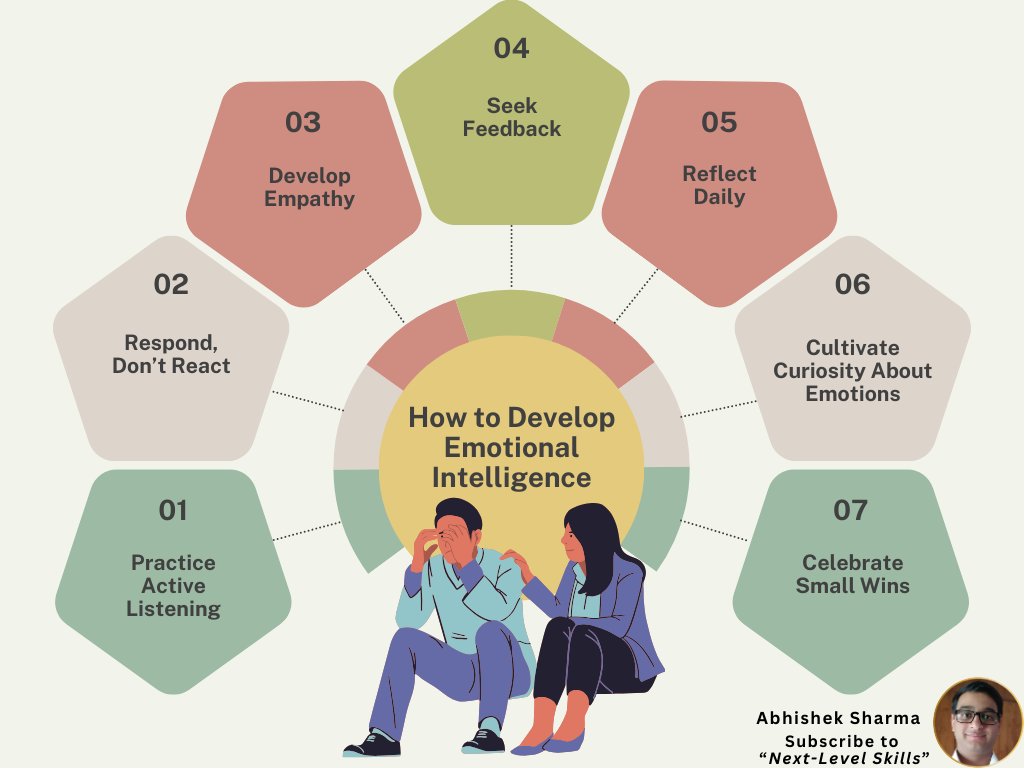
- 1Pro Tip: Practice Active ListeningAfter a conversation, summarise what you’ve heard and confirm, “So, if I understand correctly, you’re saying…” This ensures clarity and makes the other person feel heard.
- 2Pro Tip: Respond, Don’t ReactWhen you feel a strong emotion rising, silently count to five before responding. This brief pause can prevent hasty decisions.
- 3Pro Tip: Develop EmpathyDuring interactions, ask yourself: “What might this person be experiencing right now?” or “How would I feel in their situation?”
- 4Pro Tip: Seek FeedbackAsk specific questions like, “How do I handle conflict in our team?” or “Is there anything I could do to improve how I communicate?” Use their responses as a guide for growth.
- 5Pro Tip: Reflect DailyMaintain a journal where you jot down moments when emotions influenced your actions. Ask yourself questions like: • What emotions did I feel today? • What triggered them? • How could I have responded differently?
- 6Pro Tip: Cultivate Curiosity About EmotionsEngage in discussions about emotions with trusted peers or mentors. Their insights can provide valuable perspectives.
- 7Pro Tip: Celebrate Small WinsAt the end of each week, reflect on a specific instance where your EQ skills made a difference. Whether it was resolving a conflict or encouraging a teammate, acknowledge the impact of your efforts.
By practising these 7 habits consistently, you can steadily improve your emotional intelligence, fostering stronger relationships, better decision-making, and enhanced leadership capabilities.
Give it a GO!
This and other essential skills are covered in Next-Level Skills — the book.
Learn more about the Book →A Challenge
In your next challenging interaction, practise self-awareness and empathy. Instead of reacting impulsively, ask yourself:
Reflection Questions
Some Final Thoughts...
Emotional intelligence is the glue that holds teams together, the spark that ignites collaboration, and the compass that guides us through the complexities of modern work.
Anyone can become angry — that is easy. But to be angry with the right person, to the right degree, at the right time, for the right purpose, and in the right way — that is not within everyone’s power and is not easy.
— Aristotle
Thank you for being part of Next-Level Skills! I’d love to hear your experiences with emotional intelligence - when did it make a difference in your work or personal life? Let’s discuss in the comments.
Until Next Time
Abhishek
Founder & CEO, LegiQ | Building Intelligent Edge Hardware
What’s one area of emotional intelligence — self-awareness, empathy, or social skills — you’d like to improve, and why?
Have you noticed a difference in how people respond to leaders with high EQ versus low EQ? What stood out?
Do you think EQ is more innate or can it be developed over time? What’s your perspective?
What’s a moment when empathy helped you turn a challenging situation around?
How do you manage your emotions when under extreme pressure?
Apply These Skills
- ✓Put the frameworks into practice this month.
- ✓Use the reflection prompts inside the book.
- ✓Build habits that compound over time.
This and other essential skills are covered in Next-Level Skills — the book.
Learn more about the Book →This edition is reserved for supporters
Subscribe free, then unlock every past edition with just 1 successful referral.
Subscribe Free →Enjoyed this edition?
Get the next one in your inbox — first week of every month.