Decision Making
Decision-Making: The Art of Choosing Wisely
Welcome back to another edition of Next-Level Skills. Each edition, we explore the human and leadership capabilities that help us navigate work and life more effectively. Skills that move beyond theory and into practical application.
A warm welcome to everyone who has joined our community since the last edition. Whether you've been with us since the beginning or have recently discovered the newsletter or the book, thank you for being part of this journey.
This week, we delve into Decision-Making, a skill that underpins every aspect of our personal and professional lives. Every decision, whether big or small, shapes the trajectory of our goals and relationships.
Let’s begin by exploring a story that transformed my understanding of what it means to make impactful decisions.
When the Pressure Was On
Several years ago, I faced a pivotal moment while leading a project for a major client.
Midway through the timeline, a critical feature presented unexpected technical challenges, and the team was divided on how to proceed. One group advocated for simplifying the feature to meet the deadline, while others pushed for extending the timeline to ensure the feature’s full functionality.
The stakes were high, and emotions ran even higher.
After a tense meeting, I decided to step back and reflect. I gathered insights from all sides, weighed the potential risks and benefits, and consulted with stakeholders.
Ultimately, we opted for a hybrid solution — delivering a scaled-back version on time, with plans to enhance it post-launch. The decision satisfied the client’s immediate needs while preserving our reputation for quality.
What is Decision-Making?
Decision-making is the process of identifying and selecting a course of action from multiple alternatives. It involves analysing information, anticipating outcomes, and balancing short-term needs with long-term goals.
In any moment of decision, the best thing you can do is the right thing, the next best thing is the wrong thing, and the worst thing you can do is nothing.
— Theodore Roosevelt
Why Decision-Making Matters
Decision-making is at the heart of every action we take, from the smallest daily choices to critical career moves. Its impact goes far beyond the immediate outcome — strong decision-making shapes our professional growth, strengthens relationships, and drives organisational success. When approached thoughtfully, it becomes a powerful tool for creating positive change.
Strong decision-making is vital because it affects not only our own success but also the success of the teams, projects, and organisations we’re part of.
Here’s why it matters:
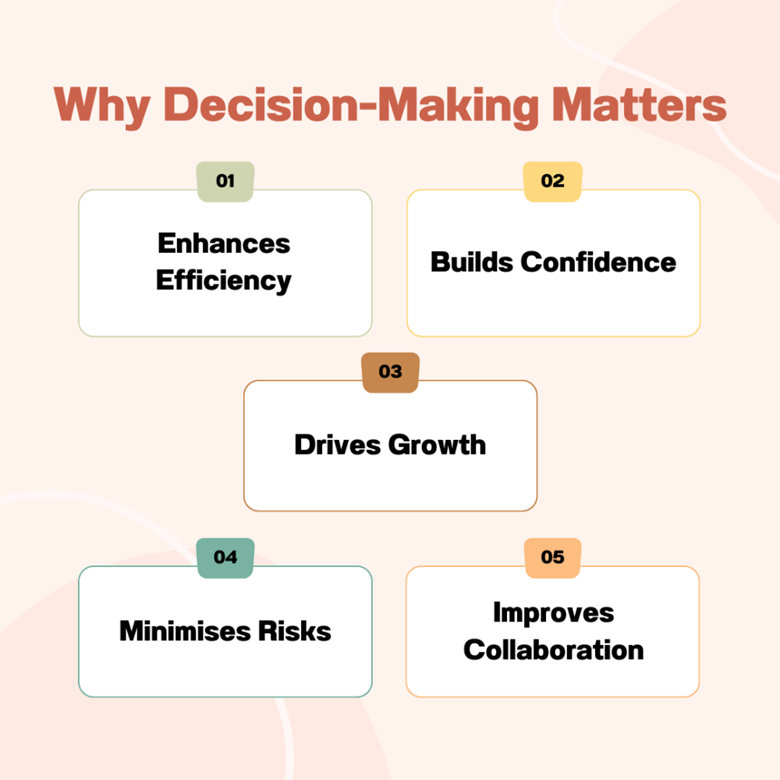
- 1Enhances EfficiencyMaking timely and well-informed decisions reduces delays and streamlines processes.
- 2Builds ConfidenceDecisiveness inspires trust and strengthens our credibility as leaders.
- 3Drives GrowthStrategic decisions create opportunities for learning, innovation, and progress.
- 4Minimises RisksThoughtful analysis mitigates potential setbacks and prepares us for uncertainties.
- 5Improves CollaborationTransparent decision-making fosters alignment and collective ownership of outcomes.
By understanding the importance of decision-making, we can approach it with a mindset of responsibility and intention.
By recognising its significance, we can begin to develop the principles and habits that lead to effective decisions. Let’s now explore the foundational principles that make decision-making a skill we can refine and rely on.
The Foundations of Effective Decision-Making
Every great decision begins with a solid foundation. Strong decision-making relies on principles that provide clarity, structure, and purpose to our choices. These foundations help us evaluate options, balance risks, and align decisions with our goals. By grounding ourselves in these principles, we can approach even the most complex scenarios with confidence.
Strong decision-making rests on several key principles:
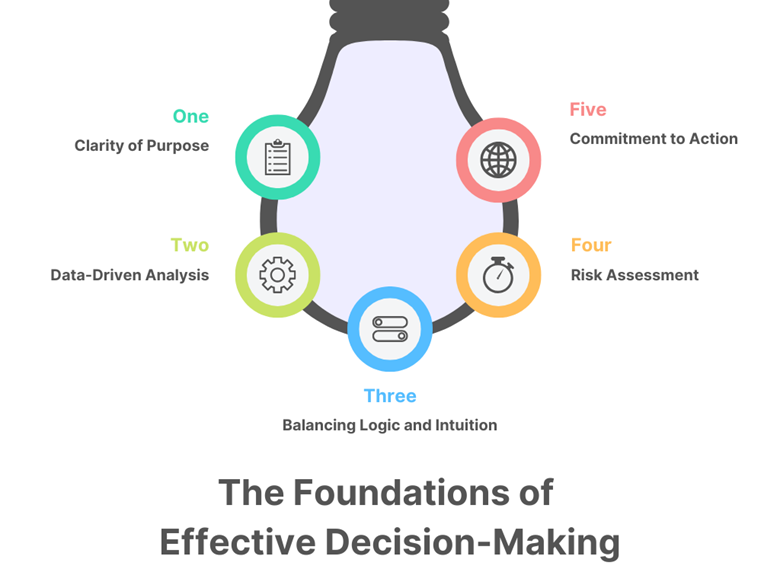
- 1Clarity of PurposeKnowing the ‘why’ behind our decisions ensures alignment with goals.
- 2Data-Driven AnalysisObjective information supports informed and logical choices.
- 3Balancing Logic and IntuitionEffective decisions blend analytical thinking with gut instincts.
- 4Risk AssessmentAnticipating potential outcomes helps minimise downsides.
- 5Commitment to ActionConfidence in implementation solidifies the value of a decision.
With these principles in mind, let’s explore actionable strategies to strengthen our decision-making skills.
When we build our decision-making on these foundational principles, we set ourselves up for thoughtful and impactful choices. These principles not only guide us but also equip us to act decisively.
With this groundwork in place, let’s move on to explore actionable strategies that turn these principles into practice.
Practical Tips for Better Decision-Making
Turning decision-making principles into practical actions is where theory meets impact. By incorporating simple yet effective strategies, we can streamline our thought processes and make informed choices with confidence. These pro tips are designed to help us approach decisions systematically and ensure we consider both short-term needs and long-term outcomes.
1. Define the Objective Clearly
Start by clarifying what we aim to achieve. A well-defined objective narrows focus and aligns efforts.
Pro Tip: If deciding on a team restructure, outline the key goal, such as improving productivity or streamlining communication, before exploring options.
2. Gather Relevant Information
Collect reliable data from diverse sources to make well-rounded decisions. Ensure the information is accurate and up-to-date.
Pro Tip: When launching a product, consider customer feedback, competitor analysis, and industry trends to inform the decision.
3. Explore Alternatives
Brainstorm multiple solutions before settling on a course of action. Evaluate the pros and cons of each option.
Pro Tip: If faced with a supply chain issue, consider sourcing from a new vendor, renegotiating terms, or adjusting delivery schedules to find the best path forward.
4. Engage Stakeholders
Involve key stakeholders in the decision-making process to gain diverse perspectives and build alignment.
Pro Tip: When planning a major organisational change, hold workshops or discussions to gather input from employees at all levels.
5. Use Decision-Making Frameworks
Apply tools like the SWOT analysis (Strengths, Weaknesses, Opportunities, Threats) or the Eisenhower Matrix to evaluate choices effectively.
Pro Tip: Use the Eisenhower Matrix to prioritise tasks, categorising them as urgent, important, or neither, to focus on high-value activities.
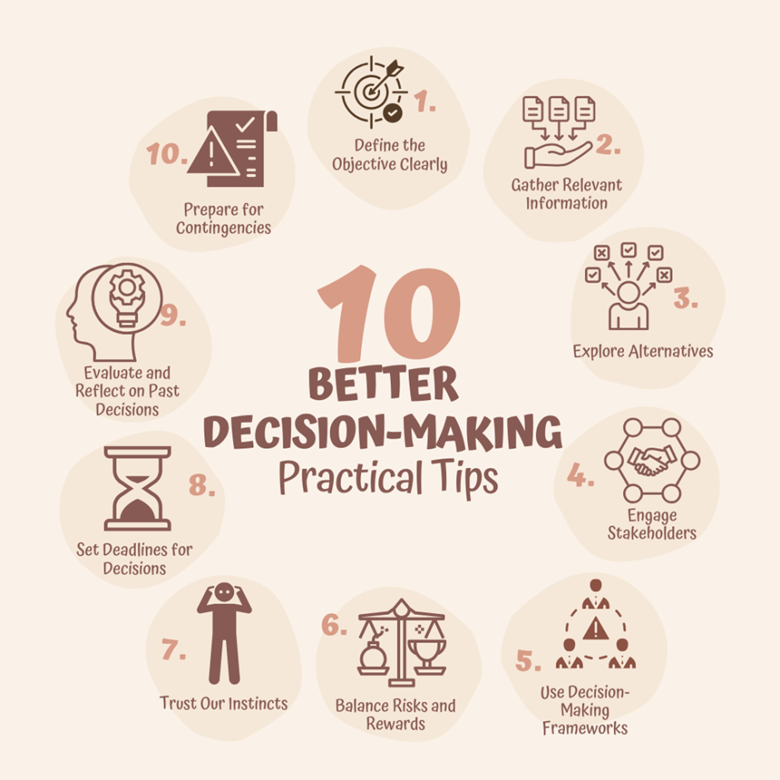
6. Balance Risks and Rewards
Assess the potential benefits and drawbacks of each option to make informed trade-offs.
Pro Tip: When considering a risky investment, weigh the potential return against financial and reputational risks, and decide if the opportunity aligns with long-term goals.
7. Trust Our Instincts
While data is critical, intuition plays a valuable role in decision-making, especially in uncertain scenarios.
Pro Tip: In a hiring decision where two candidates are equally qualified, trust our gut feeling about cultural fit or potential for growth.
8. Set Deadlines for Decisions
Avoid analysis paralysis by setting realistic deadlines for decision-making.
Pro Tip: If evaluating vendors for a project, establish a timeline for comparing quotes, making the choice, and notifying the selected partner.
9. Evaluate and Reflect on Past Decisions
Regularly review previous decisions to identify patterns and learn from outcomes.
Pro Tip: After completing a project, analyse which decisions contributed to success and which could be improved for future initiatives.
10. Prepare for Contingencies
Anticipate potential challenges and have backup plans in place. Flexibility ensures resilience when faced with the unexpected.
Pro Tip: When rolling out a new system, develop a contingency plan for technical issues, including support channels and rollback options.
These pro tips empower us to make thoughtful, well-informed decisions while balancing logic, intuition, and collaboration.
When applied consistently, they can transform decision-making into a skill we could rely on daily. With these actionable strategies in mind, let’s reflect on how we can incorporate them into our own decision-making processes.
This and other essential skills are covered in Next-Level Skills — the book.
Learn more about the Book →A challenge
Think about an important decision on the horizon — whether it’s personal or professional. Use one of the pro tips mentioned above, such as gathering diverse perspectives or applying a decision-making framework, to approach it systematically.
Ask yourself:
Reflection Questions
Some Final Thoughts...
Decision-making is both an art and a science, requiring a balance of thoughtful analysis and decisive action. By applying these principles and practical strategies, we can approach decisions with confidence, clarity, and a commitment to growth.
Whenever you see a successful business, someone once made a courageous decision.
— Peter Drucker
Whether small or monumental, our decisions shape the course of our journeys. Let’s make them wisely and purposefully.
Thank you for being part of Next-Level Skills! I’d love to hear how an effective decision-making has influenced your career or life — let’s learn from each other’s experiences.
Until Next Time,
Abhishek
Founder & CEO, LegiQ | Building Intelligent Edge Hardware
What’s the most challenging decision you’ve faced, and how did you navigate it?
How do we balance data-driven decision-making with intuition?
What strategies do we use to minimise risks when making tough choices?
How do we ensure stakeholder alignment in decisions that impact teams?
What tools or frameworks have been most effective in your decision-making process?
Can you recall a decision that didn’t go as planned? What lessons did you take away from it?
How do we overcome analysis paralysis in situations with too many options?
What’s one decision-making habit you’d like to strengthen, and why?
How do leaders effectively guide teams through collaborative decision-making?
What role does self-reflection play in improving decision-making skills?
Gift the Book
- ✓A colleague stepping into leadership.
- ✓A team member navigating change.
- ✓A friend looking to take their next step professionally.
This and other essential skills are covered in Next-Level Skills — the book.
Learn more about the Book →This edition is reserved for supporters
Subscribe free, then unlock every past edition with just 1 successful referral.
Subscribe Free →Enjoyed this edition?
Get the next one in your inbox — first week of every month.