Conflict De-escalation
Conflict De-escalation - Turning Tension into Trust
Welcome back to another edition of Next-Level Skills. Each edition, we explore the human and leadership capabilities that help us navigate work and life more effectively. Skills that move beyond theory and into practical application.
A warm welcome to everyone who has joined our community since the last edition. Whether you've been with us since the beginning or have recently discovered the newsletter or the book, thank you for being part of this journey.
This week, we’re delving into a skill that’s critical yet often overlooked: Conflict De-escalation. In high-stakes workplaces, it's not just the conflict itself that matters, but more importantly how we respond to it. De-escalation is not weakness. It’s wisdom in action.
The Tense Meeting That Changed My Tone
A few years ago, I found myself in a strategy session that quickly spiralled into a heated debate. A colleague interrupted me mid-sentence, and my instinctive reaction was sharp and defensive.
The room tensed. Momentum stalled.
Afterwards, a senior executive quietly said to me,
That landed.
I realised my tone, not just my words, had escalated the situation. From that point on, I started practising techniques to stay calm, listen longer, and speak with intent during tense moments. Not only it changed how I communicated, but also how others responded to me.
Why Conflict De-escalation Matters
We often think of conflict as a breakdown, but in reality, it’s a sign that something meaningful is at stake. Left unmanaged, conflict festers. Managed well, it leads to clarity, respect, and stronger collaboration.
Don’t let the behaviour of others destroy your inner peace.
— Dalai Lama
De-escalation allows us to stay composed, preserve relationships, and lead with empathy -even under pressure.
But to respond constructively, we need to understand what drives escalation in the first place.
Isn't it?
Escalation is Emotional, Not Just Logical
Conflicts usually escalate because emotions hijack communication.
Tone rises. Listening drops.
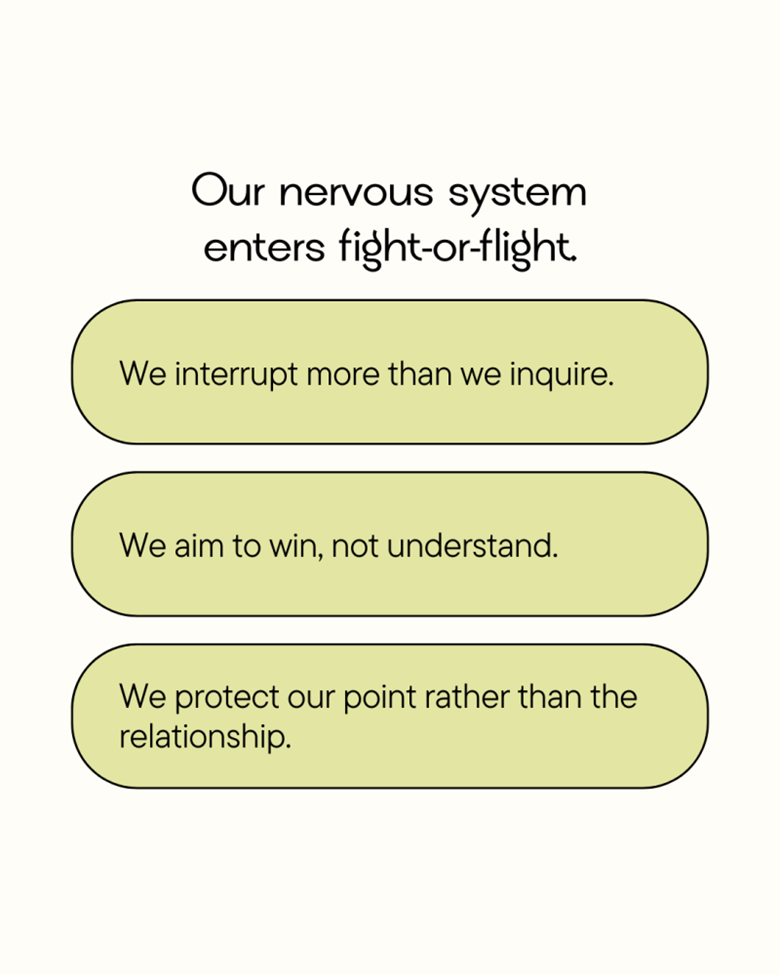
Understanding this emotional undercurrent is essential to reversing the dynamic and creating psychological safety instead of psychological strain.
Let’s now explore some of the practical strategies that allow us to de-escalate without backing down.
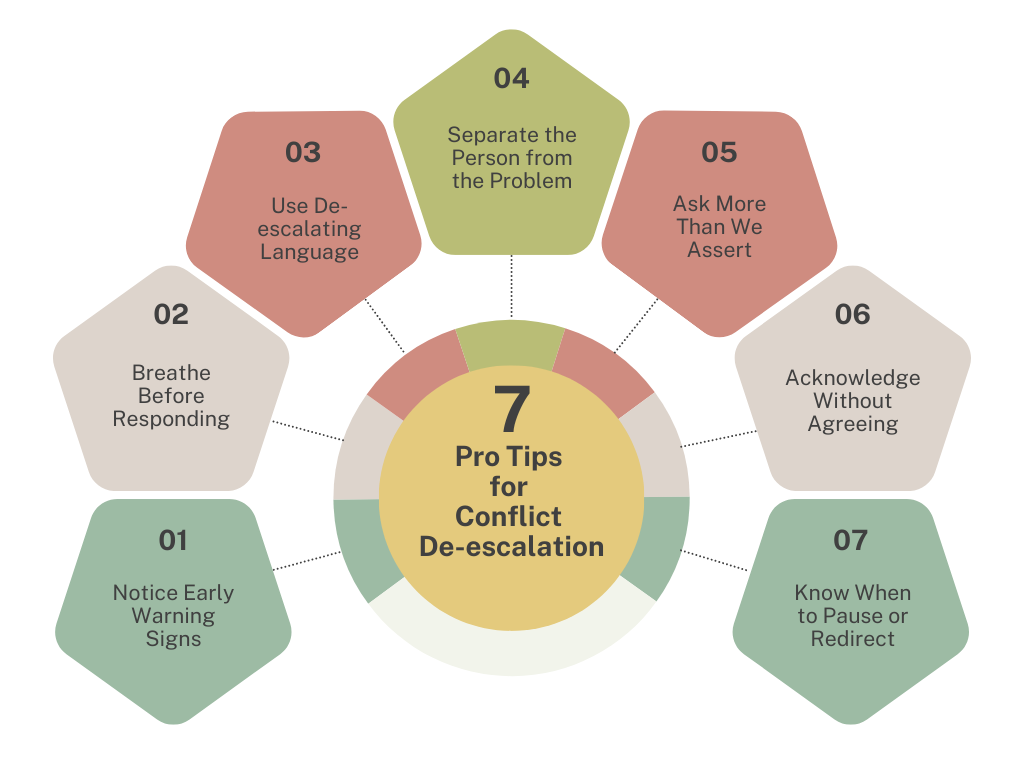
1. Notice Early Warning Signs
Before a full-blown conflict erupts, pay attention to cues : raised voices, repeated interruptions, closed-off body language. Recognising the shift allows us to intervene earlier.
Pro Tip: If we notice tension in a meeting, pause and name it: “I sense the energy’s shifted. Can we reset and hear each other out?”
2. Breathe Before Responding
A single breath can be the difference between a reaction and a response. It slows the nervous system and helps us access clarity.
Pro Tip: In a heated moment, say “Let me take a second to reflect on that” rather than rushing into reply-mode.
3. Use De-escalating Language
Language matters. Phrases like “Help me understand,” “I see your point,” or “What would success look like for you?” invite calm and cooperation.
Pro Tip: Instead of “That’s wrong,” try “I see it differently - can I share my view?”
4. Separate the Person from the Problem
Focus on the issue, not the individual. Attack the challenge, not the character.
Pro Tip: “We’re both passionate about this project, which is why it’s worth unpacking the disagreement” keeps it collaborative, not combative.
5. Ask More Than We Assert
Curiosity cools tension. Asking open-ended questions shifts the dynamic from debate to dialogue.
Pro Tip: “What’s most important to you in this situation?” reframes the interaction around shared goals.
6. Acknowledge Without Agreeing
Validation is not the same as agreement. Acknowledging someone’s emotions or perspective can immediately reduce defensiveness.
Pro Tip: “I can see this really matters to you” lowers emotional resistance, even if we hold a different view.
7. Know When to Pause or Redirect
Sometimes the best move is to pause a spiralling conversation and return later. Emotionally charged environments often need space before resolution.
Pro Tip: “Let’s take a short break and come back with a fresh lens” can restore calm and clarity.
This and other essential skills are covered in Next-Level Skills — the book.
Learn more about the Book →A Challenge
This week, test your conflict de-escalation muscles:
Reflection Questions
Some Final Thoughts...
Mastering conflict de-escalation transforms the way we lead, collaborate, and resolve. When we choose calm over control, inquiry over intensity, and understanding over ego, we change not just the outcome, but the culture.
Courage is not the absence of fear, but the triumph over it.
— Nelson Mandela
And in the context of conflict, courage often means staying present, thoughtful, and open when every instinct says otherwise.
Let’s be the calming force in the storm, because real leadership begins when the room heats up! Keep de-escalating!
Until Next Time,
Abhishek
Founder & CEO, LegiQ | Building Intelligent Edge Hardware
What might happen if we focused less on being right, and more on being heard?
What’s a phrase we can use to slow down a heated meeting or discussion?
How can we normalise productive disagreement in our teams?
What emotional triggers tend to escalate our tone, and how can we pre-empt them?
How do we typically respond to tension: fight, flight, or freeze?
Do we use more “I” statements or “You” statements during conflict?
What’s one situation recently where we could have de-escalated a conversation but didn’t?
How often do we listen to understand, not just to reply?
Have we ever seen a colleague model excellent de-escalation? What did they do differently?
When was the last time we paused instead of reacted, and what changed as a result?
Buy the Book
- ✓Learn the full Next-Level Skills framework.
- ✓Build clarity, influence, and decision-making strength.
- ✓Accelerate your personal and professional growth.
This and other essential skills are covered in Next-Level Skills — the book.
Learn more about the Book →This edition is reserved for supporters
Subscribe free, then unlock every past edition with just 1 successful referral.
Subscribe Free →Enjoyed this edition?
Get the next one in your inbox — first week of every month.