Learning Agility
The Competitive Edge of Learning Agility
Welcome back to another edition of Next-Level Skills. Each edition, we explore the human and leadership capabilities that help us navigate work and life more effectively. Skills that move beyond theory and into practical application.
A warm welcome to everyone who has joined our community since the last edition. Whether you've been with us since the beginning or have recently discovered the newsletter or the book, thank you for being part of this journey.
This week, we explore a powerful skill that goes beyond learning quickly - it’s about learning wisely: Learning Agility.
It’s what helps us thrive in uncertainty, adapt in real time, and turn every experience into an opportunity to grow.
The New System That Changed My View
A few years ago, I was asked to oversee the rollout of a new internal software across a regional team. The tech was unfamiliar. The timeframe was tight. And we had very little training support.
Initially, my instinct was to replicate old processes using the new system - just to keep things moving. But that only created confusion. It wasn’t until I stopped, asked the right questions, learned from early feedback, and experimented with a completely new workflow that things clicked.
What I realised?
Success wasn’t about knowing the tool. It was about being open to unlearning and relearning fast - agility in action.
Why Learning Agility Outpaces Knowledge Alone
In a world where skills expire faster than ever, learning agility has become more valuable than existing knowledge. It's the ability to learn, adapt, and apply insights in unfamiliar or shifting conditions.
The illiterate of the 21st century will not be those who cannot read and write but those who cannot learn, unlearn, and relearn.
— Alvin Toffler
Learning agility isn’t about mastering everything. It’s about knowing how to stay curious, adjust rapidly, and make decisions without full clarity.
Let’s explore how we can build this skill into our daily ways of working.
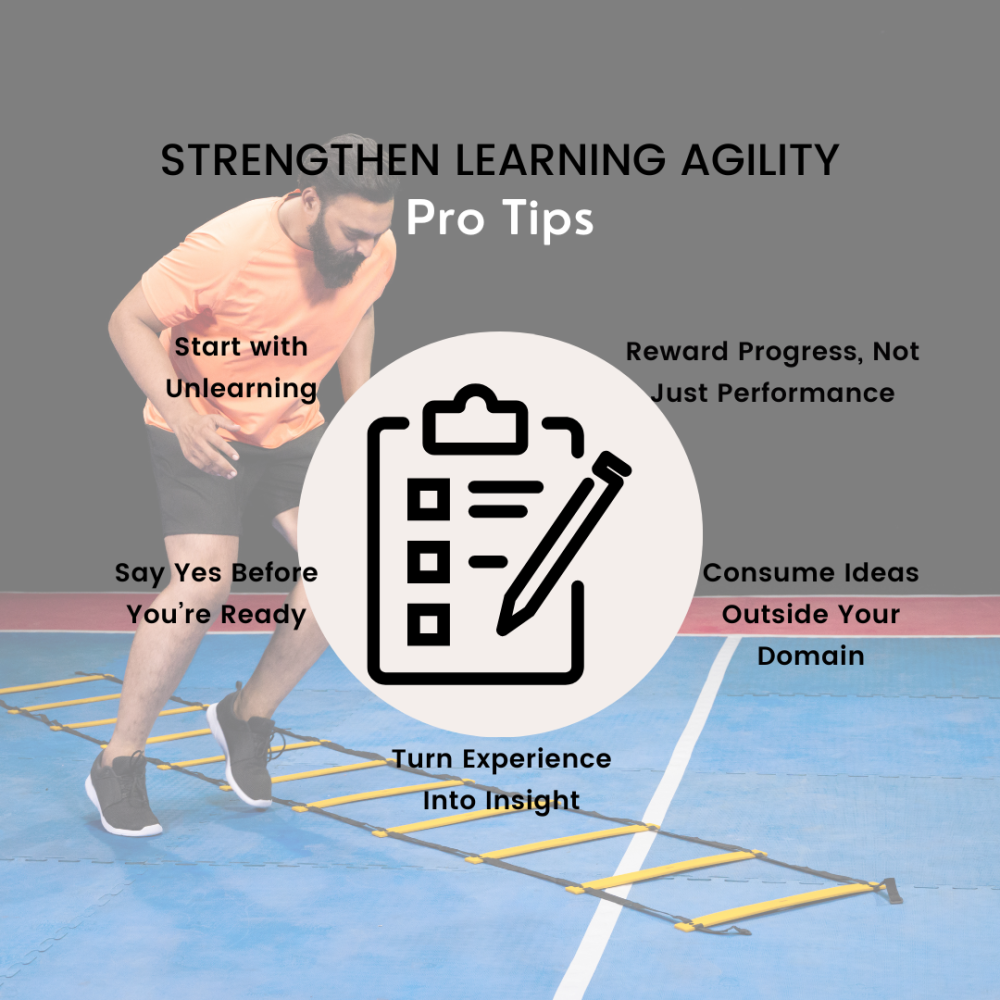
1. Start with Unlearning
Pro Tip: Begin by questioning assumptions that no longer serve us.
What processes, habits, or mindsets are we clinging to that don’t fit today’s context? Making room for new learning starts by letting go of old defaults.
2. Say Yes Before You’re Ready
Pro Tip: Stretch ourselves by stepping into roles, tasks, or challenges that aren’t fully mapped out.
Learning agility is built by doing things we’re not yet good at. We don’t grow by staying in the comfortable zone.
3. Turn Experience Into Insight
Pro Tip: After every major decision or project, run a personal “lessons learned” review.
Ask: What worked? What didn’t? What would I do differently next time? Reflection turns action into wisdom and prepares us for faster pivots next time.
4. Consume Ideas Outside Your Domain
Pro Tip: Seek inputs from industries, disciplines, or cultures different from your own.
Read broadly. Join cross-functional teams. Ask questions with no agenda. Agile learners see patterns where others see noise.
5. Reward Progress, Not Just Performance
Pro Tip: Recognise effort, experimentation, and adaptability in ourselves and our teams - even when outcomes aren’t perfect.
This creates a safe space to try, learn, and improve continuously.
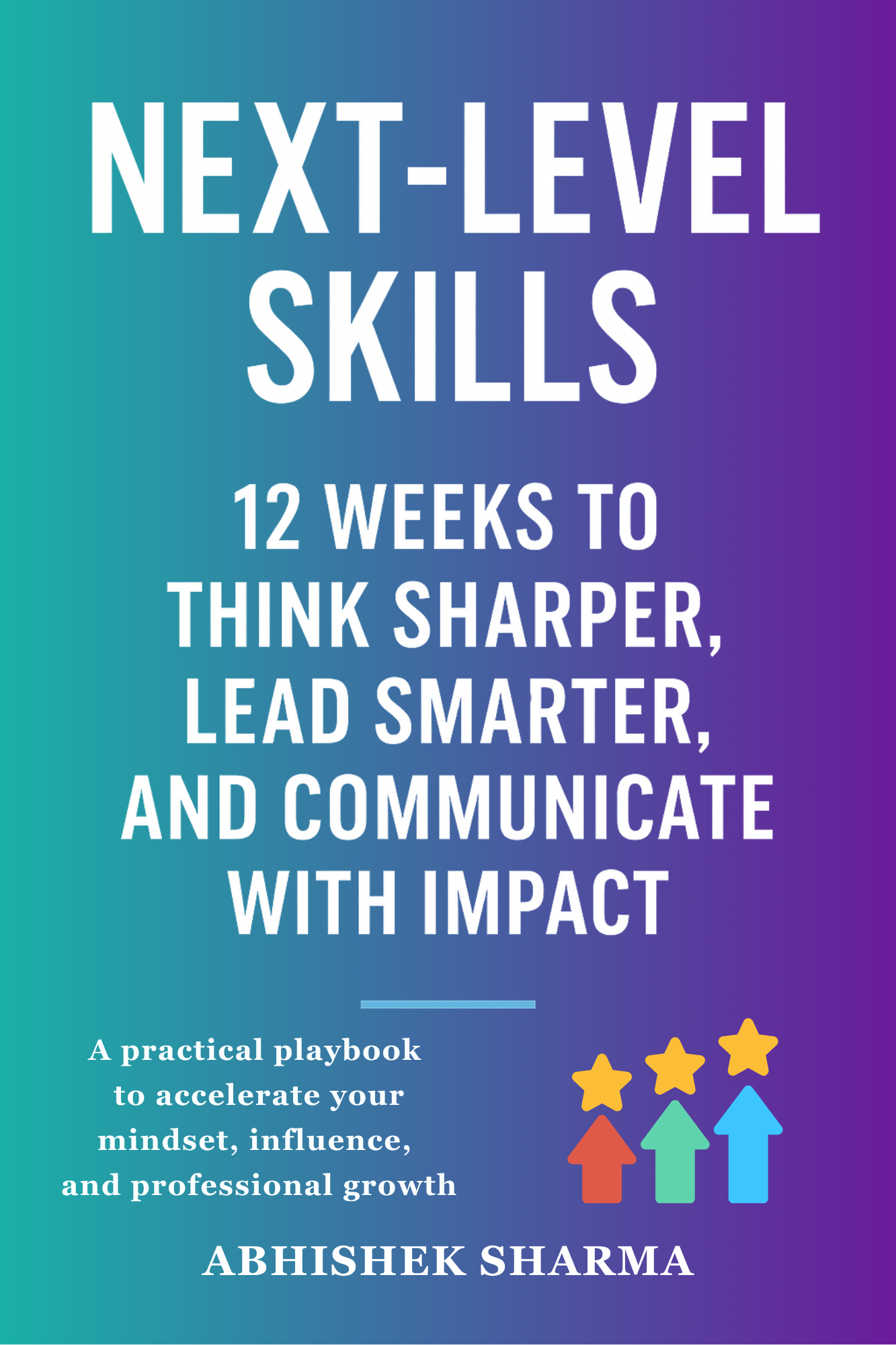
This and other essential skills are covered in Next-Level Skills — the book.
Learn more about the Book →A Challenge
Try one of the following small practices to build learning agility:
Reflection Questions
Some Final Thoughts...
Learning agility is no longer a differentiator in this fast paced and dynamically evolving world - it’s a necessity. In my opinion, those who stay nimble, open, and adaptable will always outpace those who rely solely on experience. Do you agree?
In times of change, learners inherit the earth, while the learned find themselves beautifully equipped to deal with a world that no longer exists.
— Eric Hoffer
Let’s not just learn faster. Let’s learn smarter.
Until Next Time,
Abhishek
Founder & CEO, LegiQ | Building Intelligent Edge Hardware
When was the last time we had to unlearn something important?
What belief or habit is limiting our ability to adapt right now?
How do we reward learning behaviour in our teams - even when outcomes aren’t immediate?
Are we seeking out learning or waiting for it to be assigned to us?
What would change if we started our day with a learning intention?
Are we challenging ourselves to operate outside our zone of expertise enough?
How often do we reflect after completing a task or project?
Do we see mistakes as failures or as feedback?
What’s one thing we’ve learned from someone in a different industry recently?
What small experiment could we run this week to learn something by doing?
Gift the Book
- ✓A colleague stepping into leadership.
- ✓A team member navigating change.
- ✓A friend looking to take their next step professionally.
This and other essential skills are covered in Next-Level Skills — the book.
Learn more about the Book →This edition is reserved for supporters
Subscribe free, then unlock every past edition with just 1 successful referral.
Subscribe Free →Enjoyed this edition?
Get the next one in your inbox — first week of every month.