Giving Recognition
Recognition - The Fuel Behind Performance
Welcome back to another edition of Next-Level Skills. Each edition, we explore the human and leadership capabilities that help us navigate work and life more effectively. Skills that move beyond theory and into practical application.
A warm welcome to everyone who has joined our community since the last edition. Whether you've been with us since the beginning or have recently discovered the newsletter or the book, thank you for being part of this journey.
This week, we turn our focus to a deceptively simple yet deeply powerful practice: Giving Recognition.
Recognition is not a gesture of politeness. It’s a performance driver, a culture-shaper, and one of the most effective leadership tools we often underuse.
The Day a Small Thank You Shifted a Whole Team
In one of my earlier leadership roles, I noticed a quiet but consistent contributor on our team who handled back-end reporting like clockwork. She never missed a deadline. But in the rush of larger project milestones, her work often went unnoticed.
One Friday, I took five minutes to thank her publicly during a team huddle, highlighting how her accurate reports enabled faster decision-making. The room paused. She smiled - a rare moment of being seen.
What happened next surprised me. The team energy lifted. Others began thanking one another. That week, collaboration improved.
Why Recognition Is a Strategic Leadership Skill
In high-performance environments, recognition is not fluff. It drives engagement, improves retention, builds trust, and reinforces the behaviours we want to see more of.
Catch people doing something right.
— Ken Blanchard
Recognition is about attention, not reward. It’s about tuning in and reflecting back value. And the most powerful recognition? It’s specific, timely, and sincere.
Let’s explore how to make this a consistent part of how we lead.
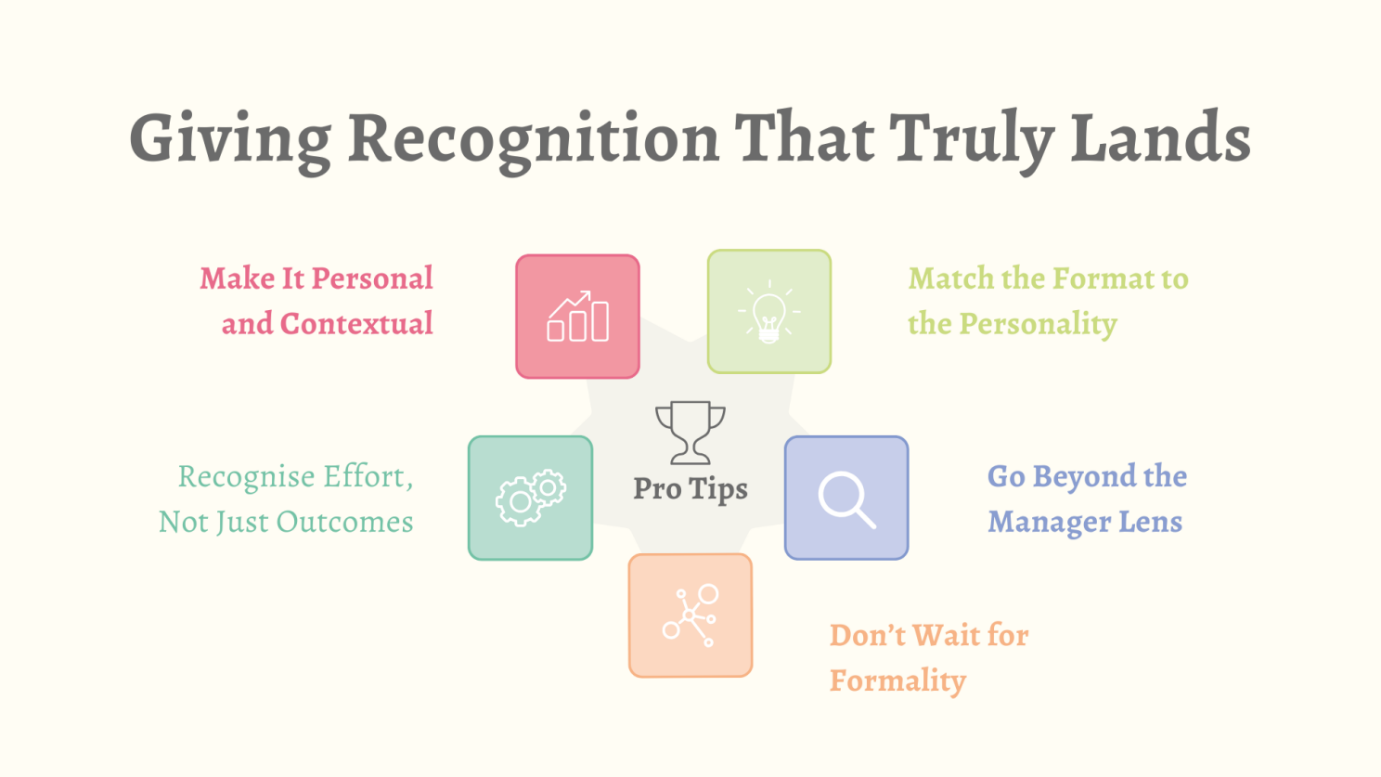
Make It Personal and Contextual
Pro Tip: Avoid generic praise. Instead of “Good job,” elaborate specifically say for example, “The way you handled that last-minute change helped us avoid a delay - thank you for stepping up.”
Recognise Effort, Not Just Outcomes
Pro Tip: Acknowledge behaviours like resilience, creativity, or learning from failure. Performance is often shaped by what’s behind the scenes.
Don’t Wait for Formality
Pro Tip: Spontaneous recognition in the flow of work has often more impact than annual reviews or structured awards. Send a message. Mention it in a meeting.
Go Beyond the Manager Lens
Pro Tip: Encourage peer-to-peer recognition. Build systems where teams regularly highlight each other’s contributions.
Match the Format to the Personality
Pro Tip: Some prefer public praise. Others value a private note. Tailor the delivery based on how individuals receive appreciation best.
This and other essential skills are covered in Next-Level Skills — the book.
Learn more about the Book →A Challenge
Try any of these to build recognition into your habits:
Reflection Questions
Some Final Thoughts...
Giving recognition is not about inflating egos. It’s about reinforcing purpose. When we see and appreciate the people around us, we unlock commitment, creativity, and community.
Appreciation can make a day, even change a life.
— Margaret Cousins
Imagine what it can do for a team, a culture, or a company.
Let’s lead with attention, and let recognition be our multiplier.
Until Next Time,
Abhishek
Founder & CEO, LegiQ | Building Intelligent Edge Hardware
How can we build micro-recognition into our weekly team rhythm?
What’s one small win we overlooked this week that deserves attention?
Are we waiting too long or too formally to express appreciation?
How does our team prefer to receive appreciation?
What impact would it have if we recognised effort as often as outcomes?
What channels do we use for recognition and could we diversify them?
Are we equating recognition with reward, or with presence and sincerity?
When was the last time we gave someone specific and timely recognition?
What behaviours do we want to reinforce and are we recognising them often enough?
Do we encourage peer recognition or rely solely on top-down praise?
Apply These Skills
- ✓Put the frameworks into practice this month.
- ✓Use the reflection prompts inside the book.
- ✓Build habits that compound over time.
This and other essential skills are covered in Next-Level Skills — the book.
Learn more about the Book →This edition is reserved for supporters
Subscribe free, then unlock every past edition with just 1 successful referral.
Subscribe Free →Enjoyed this edition?
Get the next one in your inbox — first week of every month.