Storytelling
The Stories That Shape Influence
Welcome back to another edition of Next-Level Skills. Each edition, we explore the human and leadership capabilities that help us navigate work and life more effectively. Skills that move beyond theory and into practical application.
A warm welcome to everyone who has joined our community since the last edition. Whether you've been with us since the beginning or have recently discovered the newsletter or the book, thank you for being part of this journey.
This week’s focus is on one of the most timeless and powerful tools of influence: Storytelling.
It's how we connect, inspire, and move people to action.
Yet, most of us still underestimate it!
The Whiteboard That Won Over the Room
A few months ago, I sat on an interview panel for a mid-level leadership role. One candidate stood out, not because of their credentials - all five applicants had similar experience - but because of how they answered one simple question.
We asked, “Tell us about a time you led a team through change.”
Instead of reciting KPIs or listing frameworks, they told us about a struggling team they were assigned to. Morale was low, performance stalled, and trust in leadership had eroded. They painted a picture of working with that team on the first day, noticing empty faces during team huddles, handwritten resignation notes taped to keyboards. They spoke about listening more than leading at first, and how slowly, one conversation at a time, they rebuilt what was broken.
By the time they finished, the room had shifted. It wasn’t about numbers - it was about impact. That story didn’t just answer the question. It connected.
They got the job.
Why Storytelling Is a Strategic Skill
In a world saturated with noise, clarity and emotion cut through. Data informs, but stories move. They stay with us long after meetings end and dashboards fade.
Leaders who tell powerful stories create alignment, influence decisions, and build cultures. Teams don’t just remember what was said - they remember how they felt. And when we remember feeling, we act.
Maybe stories are just data with a soul.
— Brené Brown
Let’s dive into the anatomy of impactful storytelling and how we can weave it into our leadership toolkit.
What Makes a Story Influential
Influential stories are not epic tales. They are real, relevant, and emotionally honest. Whether we’re presenting to a boardroom or mentoring a junior team member, the structure matters.
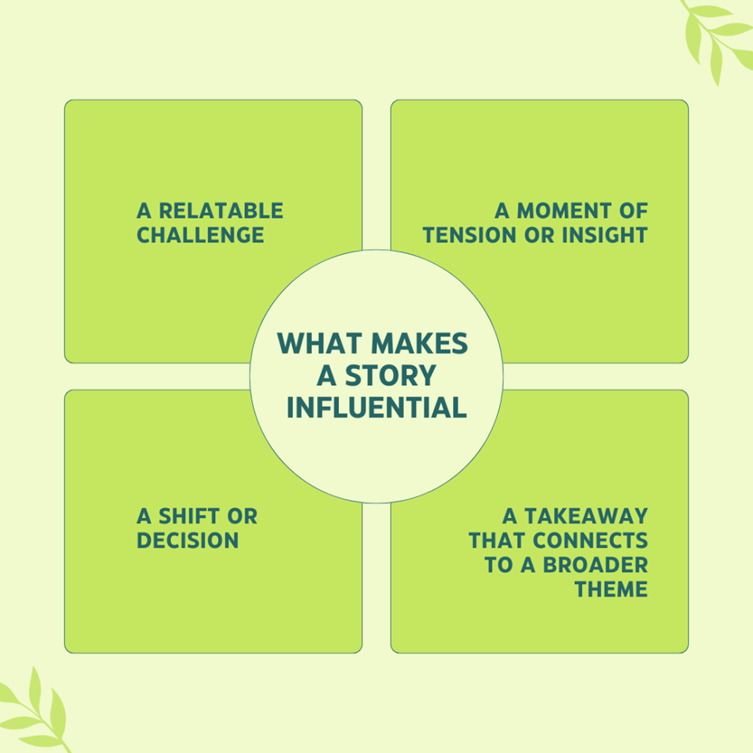
We don’t need to be dramatic. We just need to be specific. Influence grows when others see themselves in the narrative.
Now that we understand the anatomy, let’s look at where this matters most.
Moments Where Storytelling Moves the Needle
Some opportunities call for more than facts and logic. These are the moments where storytelling becomes our superpower:
- 1Leading ChangeWhen we help others understand the “why” behind a shift, we bring them along instead of dragging them.
- 2Onboarding New TeamsSharing stories of culture, missteps, and past successes builds faster belonging.
- 3Performance Reviews or CoachingIllustrating behaviours with stories makes feedback land with clarity, not sting.
- 4Presenting Ideas to Senior LeadershipData shows the "what", but stories illustrate the impact.
Let’s now explore how to sharpen this skill.
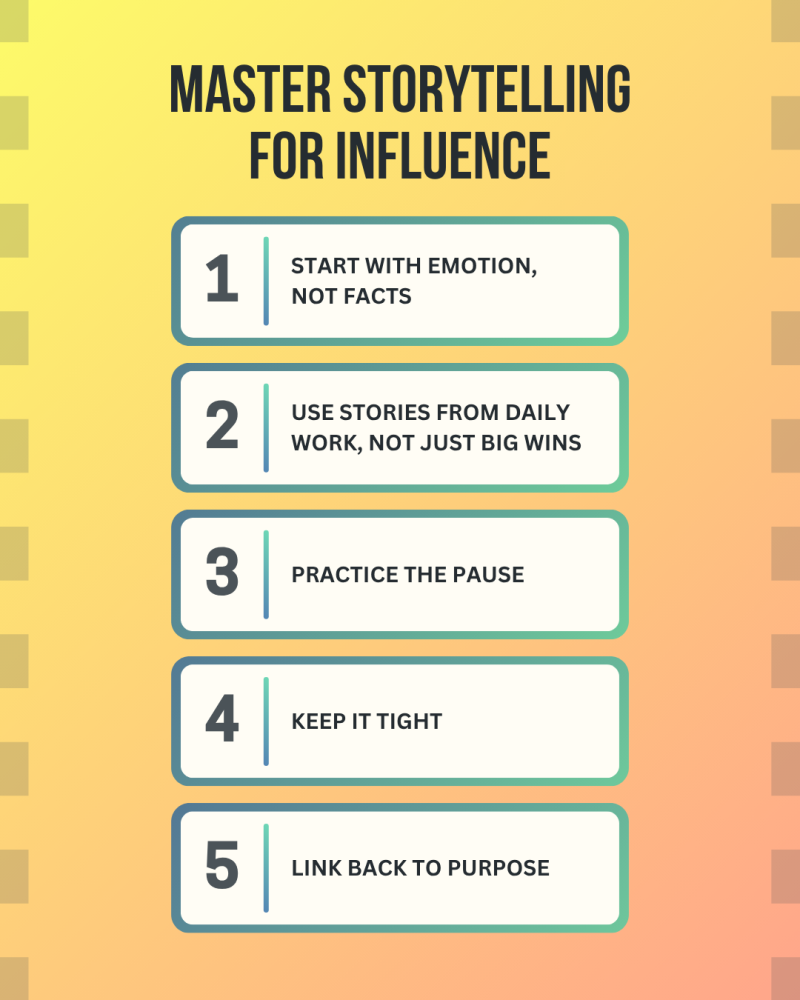
Pro Tip #1: Start with Emotion, Not Facts
Before outlining the details, focus on the human element. What did it feel like? What did it change?
Pro Tip #2: Use Stories from Daily Work, Not Just Big Wins
A story about a failed pitch or a tricky email can sometimes connect more than grand achievements.
Pro Tip #3: Practice the Pause
After delivering the key insight or emotion, pause. Let the weight of the moment settle before continuing.
Pro Tip #4: Keep It Tight
Aim for stories that can be told in under 2 minutes. Edit relentlessly. Clarity is kindness.
Pro Tip #5: Link Back to Purpose
Always tie the story to a broader message, goal, or value. Influence happens when people understand why it matters.
Now that we have the tools, let’s look at how to embed them into our daily leadership.
Integrating Storytelling Into Our Work
We don’t need to wait for the perfect moment to tell a great story. The everyday is filled with material if we learn to spot it.
- →Reflect weekly on one moment that surprised, challenged, or taught us something. That’s story gold.
- →Share quick reflections during stand-ups or team retros : these are mini-stories in disguise.
- →Include short narratives in presentations or reports - even one sentence can shift tone and attention.
Like any skill, storytelling sharpens with use.
This and other essential skills are covered in Next-Level Skills — the book.
Learn more about the Book →A Challenge
Influence begins with connection. This week, challenge yourself to:
Reflection Questions
Some Final Thoughts...
When we shape narratives with care, we move people not just to understand, but to act.
Stories constitute the single most powerful weapon in a leader’s arsenal.-
— Dr. Howard Gardner, from Harvard University
Let’s use that wisely! Agree?
Until Next Time,
Abhishek
Founder & CEO, LegiQ | Building Intelligent Edge Hardware
What’s one story from our work life that shifted how we lead?
Have we ever changed our mind because of someone’s personal story?
Do we remember a time when a story helped a strategy land better?
How do we differentiate between oversharing and impactful storytelling?
What’s the balance between data and narrative in high-stakes communication?
Who’s the best storyteller we know at work, and why?
Have we tried using storytelling in interviews or performance reviews?
What kind of stories connect best across different cultures or teams?
Is there a moment from this year that could become a signature story?
What’s one story we’d want others to remember us by?
Gift the Book
- ✓A colleague stepping into leadership.
- ✓A team member navigating change.
- ✓A friend looking to take their next step professionally.
This and other essential skills are covered in Next-Level Skills — the book.
Learn more about the Book →This edition is reserved for supporters
Subscribe free, then unlock every past edition with just 1 successful referral.
Subscribe Free →Enjoyed this edition?
Get the next one in your inbox — first week of every month.