Building Trust
Building Trust: The Cornerstone of Collaboration
Welcome back to another edition of Next-Level Skills. Each edition, we explore the human and leadership capabilities that help us navigate work and life more effectively. Skills that move beyond theory and into practical application.
A warm welcome to everyone who has joined our community since the last edition. Whether you've been with us since the beginning or have recently discovered the newsletter or the book, thank you for being part of this journey.
This week, we explore Building Trust, a skill that forms the foundation of meaningful relationships, effective collaboration, and leadership. Trust is both earned and nurtured, and while it takes time to build, it can be quickly eroded. Before we dive into strategies for fostering trust, let me share a story that reshaped my perspective on its importance.
When Trust Saved the Project
Several years ago, I led a cross-functional team tasked with delivering a high-stakes project. One month into the timeline, we encountered a major setback — a critical component was delayed, jeopardising our progress. Our first step was to check with the vendor about possible solutions or expedited delivery options, but their constraints left us with no viable alternatives.
With the project stalled, some team members began assigning blame, while others doubted whether we could meet the deadline. I found myself deeply concerned about how we would navigate this challenge.
Recognising the gravity of the situation, I called an all-hands meeting. Instead of dwelling on the setback, I prioritised transparency and encouraged each team member to openly share their concerns and ideas. By acknowledging the challenges and showing vulnerability about our shared responsibility, we created a safe space for collaboration and problem-solving.
To our surprise, one of the quietest team members proposed an alternative vendor, and after careful evaluation, we pivoted quickly. Within a few weeks, the project was back on track. More importantly, the trust we built during that crisis not only ensured the project’s success but also strengthened the team’s cohesion for years to come.
What is Trust?
Trust is the confidence we place in others’ integrity, reliability, and intent. It is the foundation of relationships, enabling open communication, collaboration, and mutual respect. Trust is built on consistency, transparency, and accountability, and it must be earned, not demanded.
The best way to find out if you can trust somebody is to trust them.
— Ernest Hemingway
Why Building Trust Matters
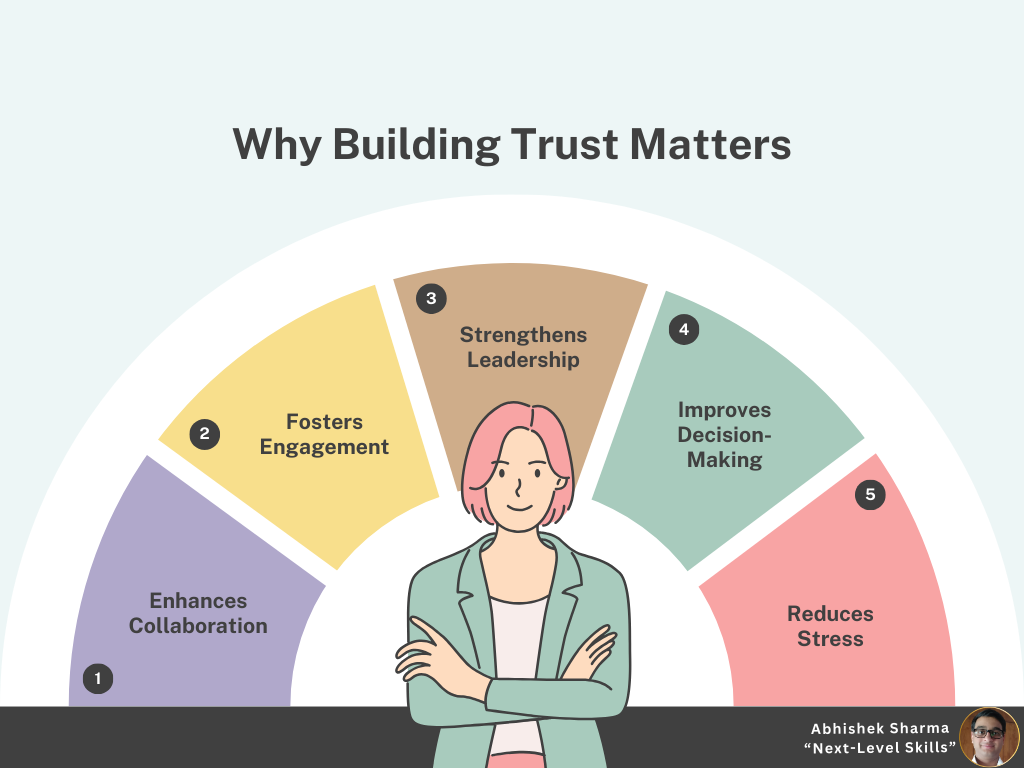
Trust is at the heart of any professional success, and its absence undoubtedly creates silos, miscommunication, and inefficiency. Here’s why trust is indispensable in my opinion, it —
- 1Enhances CollaborationTeams with high levels of trust communicate openly, resolve conflicts efficiently, and innovate more effectively.
- 2Fosters EngagementTrust encourages commitment and loyalty, boosting morale and productivity.
- 3Strengthens LeadershipTrusted leaders inspire confidence, motivating teams to achieve ambitious goals.
- 4Improves Decision-MakingWhen trust exists, team members are more likely to share honest feedback and innovative ideas.
- 5Reduces StressTrust minimises workplace tension by creating a safe, supportive environment.
To cultivate trust, we need to understand its essential components and practice consistent behaviours that continuously reinforce it. Let's have a look.
The Three Pillars of Trust
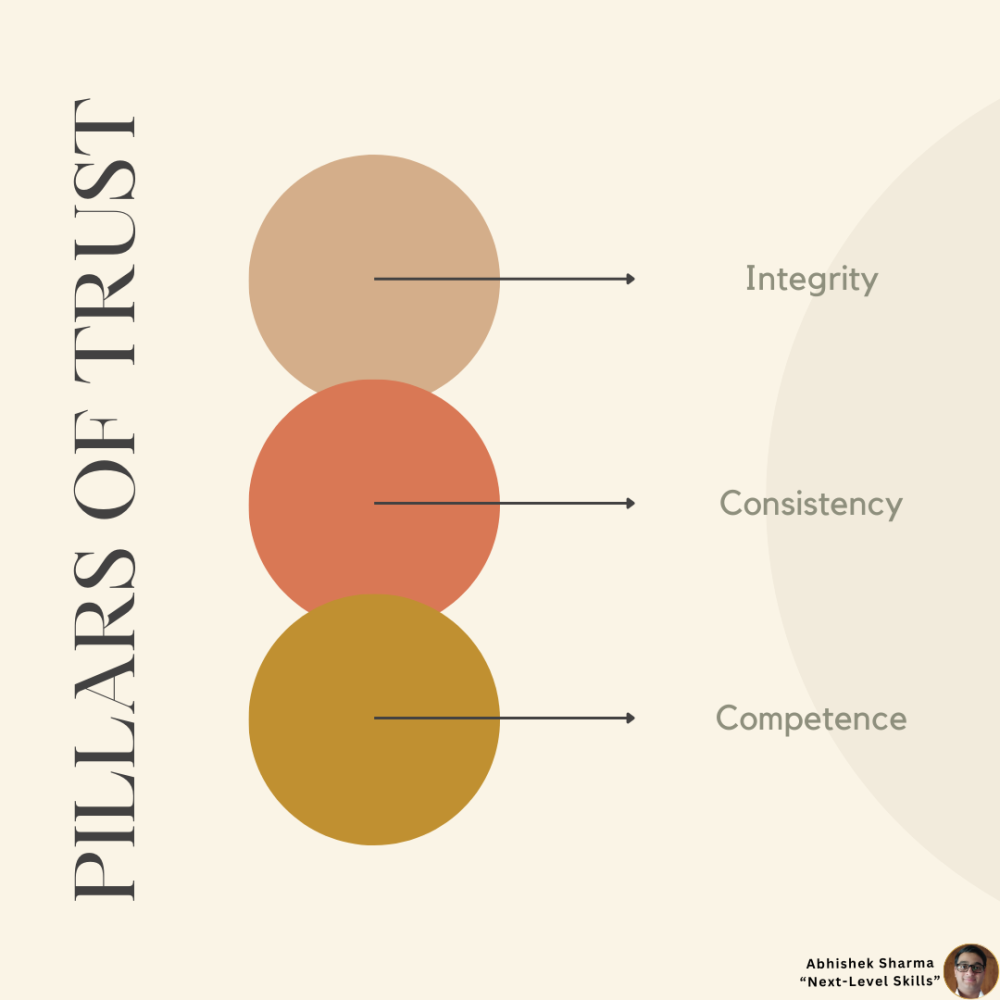
Building trust starts with a strong foundation. Just as a structure relies on its pillars for stability, trust rests on key elements that uphold its strength and durability. Let’s explore the three essential pillars that form the bedrock of trust.
- 1CompetenceDemonstrating our expertise and reliability builds confidence in our ability to deliver results.
- 2ConsistencyBeing dependable and predictable in our actions creates a sense of stability.
- 3IntegrityActing with honesty and aligning words with actions fosters credibility and respect.
Lets look at some of the practical tips we could use to build trust with our colleagues, within our respective teams and organisations at large. These tips focus on each individual to play their respective part in creating a trust-worthy environment, within their teams or organisation, where collaboration and innovation could prosper.
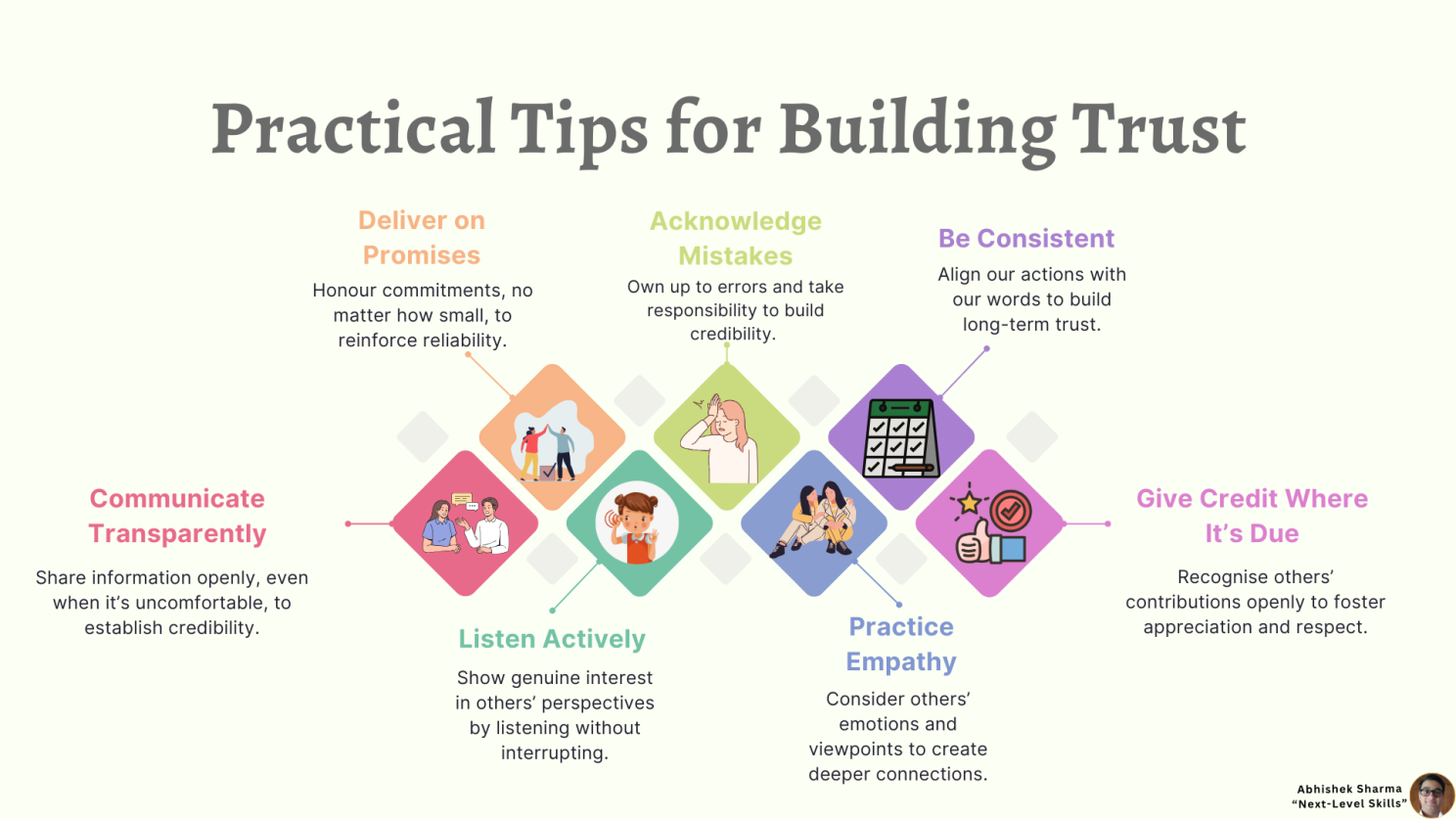
Building trust requires consistent effort and intentional action. It’s about more than just words — it’s about creating an environment where people feel safe, valued, and understood. By implementing these practical strategies, we can foster deeper connections, enhance collaboration, and strengthen relationships both professionally and personally.
1. Communicate Transparently
Pro Tip: Share information openly, even when it’s uncomfortable, to establish credibility and maintain trust. Transparent communication demonstrates integrity and creates an atmosphere of honesty.
Example: If a deadline is likely to slip, address it proactively with the team, providing clear reasons and a proposed solution, rather than waiting until it becomes an issue. This approach not only builds trust but also fosters collaboration.
2. Deliver on Promises
Pro Tip: Honour commitments, no matter how small, to reinforce reliability and dependability. Fulfilling promises consistently builds a track record of trustworthiness.
Example: If we promise to provide feedback by a specific date, we must ensure it’s delivered on time. Meeting expectations, especially in small matters, demonstrates that our word is dependable.
3. Listen Actively
Pro Tip: Show genuine interest in others’ perspectives by listening without interrupting. Active listening not only shows respect but also helps us understand concerns and build rapport.
Example: During a brainstorming session, acknowledge contributions by paraphrasing key ideas, such as saying, “If I understand correctly, you’re suggesting…” This validates the speaker and creates a sense of inclusion.
4. Acknowledge Mistakes
Pro Tip: Own up to errors and take responsibility to build credibility. Admitting mistakes shows humility and strengthens trust by demonstrating accountability.
Example: If we overlook an important detail in a report, we should admit the oversight promptly and share a plan to correct it. For instance, “I missed this section; I’ll update it by noon and ensure it aligns with our requirements.”
5. Practice Empathy
Pro Tip: Consider others’ emotions and viewpoints to create deeper connections and build mutual understanding. Empathy fosters a culture of care and collaboration.
Example: If a colleague seems disengaged during a meeting, check in with them privately to understand their challenges and offer support. A simple question like, “Is everything okay? I noticed you seemed quieter today,” can strengthen trust and camaraderie.
6. Be Consistent
Pro Tip: Align actions with words to build long-term trust. Consistency provides predictability, which fosters confidence in relationships.
Example: If we commit to fostering an inclusive team environment, we should ensure our decisions, behaviours, and policies consistently reflect that value. This consistency reassures team members that inclusivity isn’t just a statement but a genuine priority.
7. Give Credit Where It’s Due
Pro Tip: Recognise others’ contributions openly to foster appreciation and respect. Celebrating achievements builds morale and shows gratitude.
Example: Highlight a teammate’s effort in completing a critical task during a meeting or presentation, saying something like, “This project was a success largely because of [Name’s] innovative approach.” Public recognition strengthens trust and motivates future contributions.
Building trust isn’t a one-time effort — it’s a continuous commitment.
Each step we take to communicate transparently, listen actively, and honour our commitments brings us closer to fostering lasting trust in all our relationships.
This and other essential skills are covered in Next-Level Skills — the book.
Learn more about the Book →A Challenge
Think about a relationship in which trust needs to be strengthened. This week, focus on one of the three pillars — competence, consistency, or integrity — and take specific steps to reinforce it.
Some Final Thoughts...
Building trust is a continuous journey that requires patience, consistency, and self-awareness. It is the glue that holds teams together, the foundation of effective leadership, and the catalyst for innovation and collaboration.
Trust is the one thing that changes everything.
— Stephen Covey
Let’s commit to building trust in our relationships and workplaces, one step at a time!
Thank you for being part of Next-Level Skills! I’d love to hear how trust has shaped your experiences — whether as a leader, a teammate, or a friend. Let’s share and grow together.
Until Next Time,
Abhishek
Founder & CEO, LegiQ | Building Intelligent Edge Hardware
What’s the balance between trusting others and holding them accountable?
What’s a time when trusting a team member or colleague led to unexpected success?
What’s one behaviour that has helped you build trust in professional relationships?
How do you handle situations where trust has been broken?
What role does transparency play in strengthening trust within teams?
How do we ensure trust remains strong in a virtual or hybrid work environment?
What’s one pillar of trust you’d like to focus on improving, and why?
Can trust be rebuilt once lost? What strategies have worked for you?
How do leaders effectively model trust for their teams?
How does trust influence creativity and collaboration in teams?
Gift the Book
- ✓A colleague stepping into leadership.
- ✓A team member navigating change.
- ✓A friend looking to take their next step professionally.
This and other essential skills are covered in Next-Level Skills — the book.
Learn more about the Book →This edition is reserved for supporters
Subscribe free, then unlock every past edition with just 1 successful referral.
Subscribe Free →Enjoyed this edition?
Get the next one in your inbox — first week of every month.