Developing a Growth Mindset
Growth Mindset - The Thinking That Changes Everything
Welcome back to another edition of Next-Level Skills. Each edition, we explore the human and leadership capabilities that help us navigate work and life more effectively. Skills that move beyond theory and into practical application.
A warm welcome to everyone who has joined our community since the last edition. Whether you've been with us since the beginning or have recently discovered the newsletter or the book, thank you for being part of this journey.
This week, we’re diving into one of the most foundational (and transformational) soft skills of all: developing a growth mindset.
“You’re Not a Natural at This” (and That’s a Good Thing)
Years ago, I struggled with public speaking. Every talk left me drained, overly rehearsed, and secretly hoping someone would cancel the session. I admired colleagues who seemed effortlessly articulate.
After one particularly rough presentation, a mentor pulled me aside and said, “You’re not a natural at this… but that’s exactly why you’ll get better. Because naturals don’t always improve, learners do.”
That line changed everything. I stopped trying to "be good" and started trying to "get better." Over time, I sought feedback, watched recordings, took courses and improved. Today, speaking is one of the most energising parts of my work.
It didn’t happen overnight, but it started the moment I shifted from performance mode to growth mode.
Why a Growth Mindset Matters
In a world where the half-life of skills is shrinking, the ability to keep learning, adapting, and evolving is a core professional currency. A growth mindset isn’t about constant positivity, it’s about seeing failure as feedback, not a final verdict.
Becoming is better than being.
— Carol Dweck, who coined the term
That subtle difference in outlook reshapes how we approach challenges, feedback, and effort.
Let’s unpack what a growth mindset really means in action and how to build it.
The Growth vs. Fixed Mindset
We often hear these terms, but what do they look like in everyday work and life?
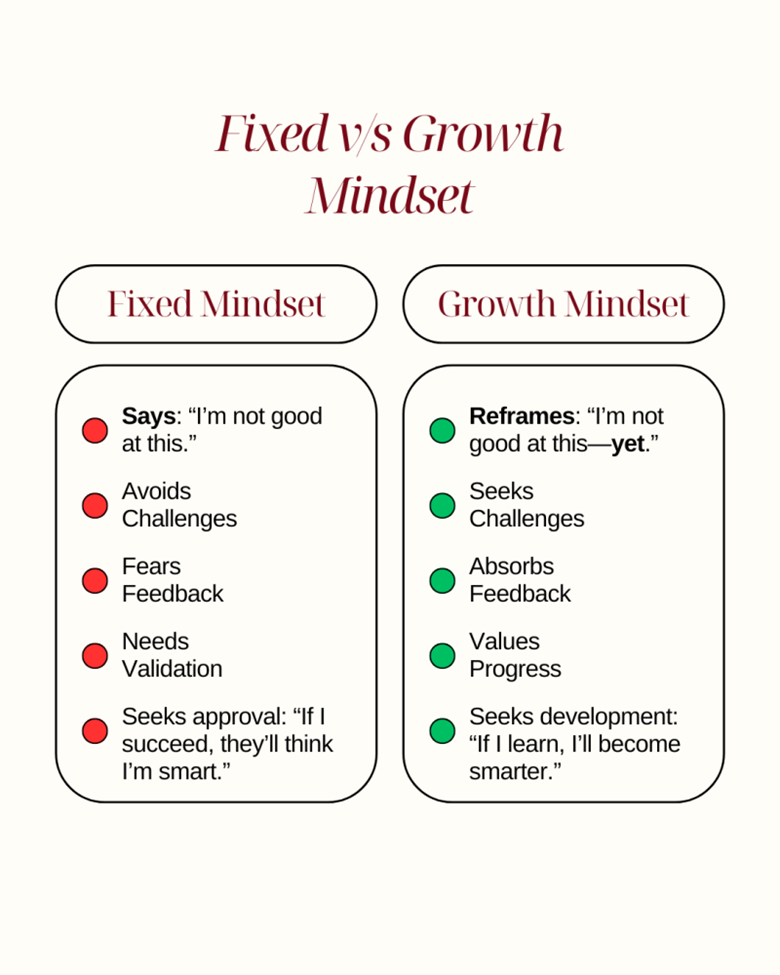
A growth mindset allows us to detach our identity from our outcomes, and instead attach it to our process.
But how do we develop that habit of thinking?
Let’s look at a few real-world, practical strategies.
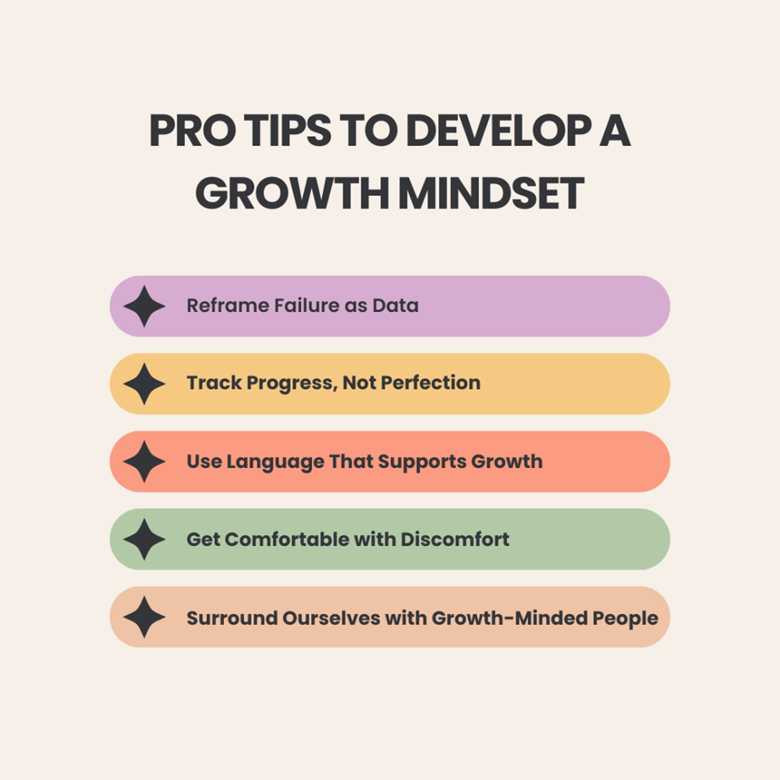
1. Reframe Failure as Data
Rather than labelling outcomes as “success” or “failure,” treat everything as input. Ask, “What is this experience trying to teach me?”
2. Track Progress, Not Perfection
Keep a “Growth Tracker” journal. Log wins, lessons, and changes in mindset every week. Over time, we’ll see how far we’ve come — even if results feel slow.
3. Use Language That Supports Growth
Words shape mindset. Swap “I can’t” for “I haven’t figured it out yet.” Shift from self-judgement to self-direction.
4. Get Comfortable with Discomfort
Growth often feels awkward. The discomfort is a sign we’re stretching — not failing. Don’t confuse friction with failure.
5. Surround Ourselves with Growth-Minded People
We rise to the level of the conversations we’re part of. Spend time with people who ask “What did you learn?” more than “Did you win?”
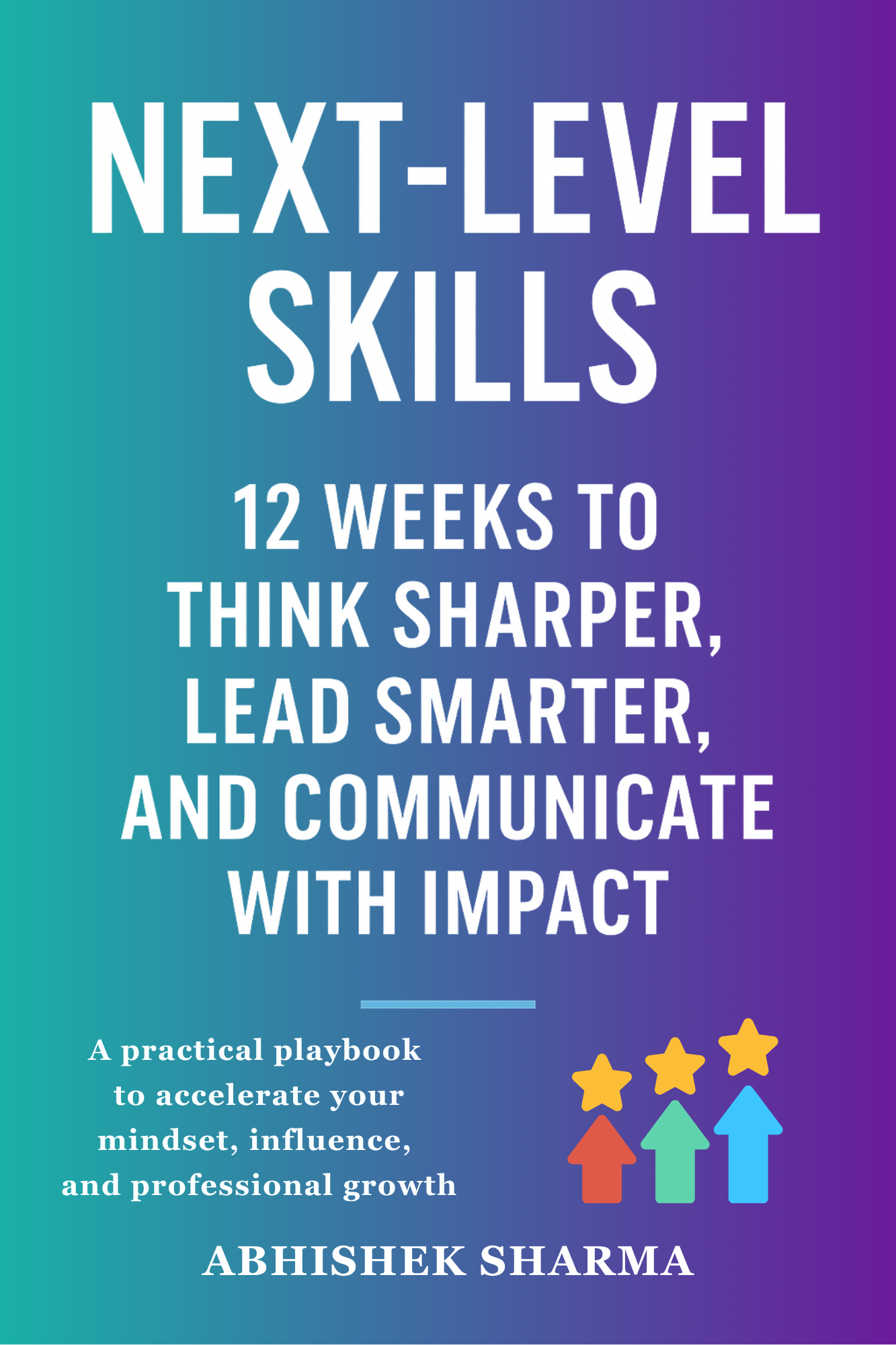
This and other essential skills are covered in Next-Level Skills — the book.
Learn more about the Book →A Challenge
This week, let's try this three-part challenge to build your growth mindset muscle:
Reflection Questions
Some Final Thoughts...
Developing a growth mindset isn’t about ignoring setbacks, it’s about choosing to evolve through them.
When we believe we can grow, we open doors to learning, leadership, and long-term fulfilment.
Every action we take is a vote for the person we want to become.
— James Clear
Let’s keep casting those votes. And let’s keep growing together.
Until Next Time,
Abhishek
Founder & CEO, LegiQ | Building Intelligent Edge Hardware
What internal story are we holding on to that might be limiting our growth?
Who in our life exemplifies a growth mindset? What do they do differently?
If we fully believed we could grow in any area, what would we attempt this year?
How do we build growth habits into our daily routine, not just once in a while?
When did we last say, “I don’t know” — and why did it matter?
How do we typically respond to feedback — defensively or with curiosity?
What’s one skill we’ve avoided learning, and how can we reframe our mindset around it?
Have we ever surprised ourselves by getting better at something we once struggled with?
What’s a recent challenge we approached differently because of a growth mindset?
What environments encourage our growth mindset and which suppress it?
Apply These Skills
- ✓Put the frameworks into practice this month.
- ✓Use the reflection prompts inside the book.
- ✓Build habits that compound over time.
This and other essential skills are covered in Next-Level Skills — the book.
Learn more about the Book →This edition is reserved for supporters
Subscribe free, then unlock every past edition with just 1 successful referral.
Subscribe Free →Enjoyed this edition?
Get the next one in your inbox — first week of every month.